
These posts are duplicated from LinkedIn, where they’re seen by tens of thousands of people each week. They often spark lively, valuable debate and your voice would be welcome. Visit my profile to connect with me.
Four common challenges — four recommendations I wish someone had give me:
1. “We’re struggling to sell the benefits of CX/UX/whatever to the business.”
Let’s be honest, you’re probably crap at selling — after all, you’re not in sales! My advice — read Keenan’s Gap Selling and you’ll be better at selling than most sales people.
2. “We can’t prove ROI / get budget.”
Here’s the brutal truth — you probably don’t have a clue about ROI calculations or how finance allocate resources. Why would you, you’re not a CFO! Fear not. When you’re done with Keenan, read Financial Intelligence by Berman & Knight and your acumen will increase 1000%.
3. “We can’t move the needle on loyalty.”
Sorry to break it to you, but there's a strong chance that what you know about loyalty and satisfaction is bunk. The good news is by reading Tim Keiningham’s books — Loyalty Myths and The Wallet Allocation Rule — you can get straightened out.
4. “Our CX programs aren’t helping us build or grow our brand.”
One last slice of humble pie — you probably don't know much about brand building and growth, but why would you unless you're from a marketing background? Start plugging the gap with Byron Sharp's classic — How Brands Grow: What Marketers Don’t Know.
I promise you'll thank me later!
See this post on LinkedIn
The most common goal for customer experience programs is improving retention and loyalty. Why? One reason I hear all the time is that loyal customers will tell people about our brand and help us grow. Let me stop you right there.
In reality, loyal, long-term customers do relatively little promoting compared to new customers for one fairly obvious reason - we share the news not the olds. Think about it.
Why would we randomly start telling people about products we've used for years? We don't often do that because we take them for granted. Instead, we tell people about new discoveries and recent events because they're novel and interesting.
There's a ton of implications but here's the big one: a great discovery, sales and on-boarding experience doesn’t just help you win one customer, it can help you create an acquisition and growth machine.
Example: I recently became a Kiehl’s customer after a great in-store experience. I wouldn’t shut up about it and now my wife and friends are becoming customers too. One great acquisition experience creates even more acquisition.
If you're growth-minded then, ask yourselves:
Are we too focused on retention?
How good is our discovery, sales and first time customer experience?
It might be time to change tack!
See this post on LinkedIn

Most companies focus on improving interactions customers perform most often, which makes sense if they're below adequate. But it’s often hard for customers to notice these improvements because they already have high expectations and the improvements themselves tend to be incremental.
More effective strategies to influence perceptions are:
a) “Compete in the cracks” by finding parts of the experience where you don’t do anything and expectations are low, making improvements more noticeable.
b) Incorporate one or two trivial, yet unexpected details that stick out.
An example of each:
Domino’s filled the dead spot between ordering a pizza and it arriving, creating their now famous pizza tracker. The crowd went wild, even though knowing that a pizza’s on its way isn’t exactly front page news.
At their first class lounge in Frankfurt, Lufthansa give you a branded rubber duck to take with you to your private bathroom — the only feature of the entire flying experience that Ben Smith mentioned when I met him at the airport. He glossed over the the lie-flat bed, extensive whisky selection and being driven to the plane in a Porsche - all of which are par for the course.
Two strategies then: compete in the cracks, and build a couple of rubber ducks into your experience. Quack!
See this post on LinkedIn
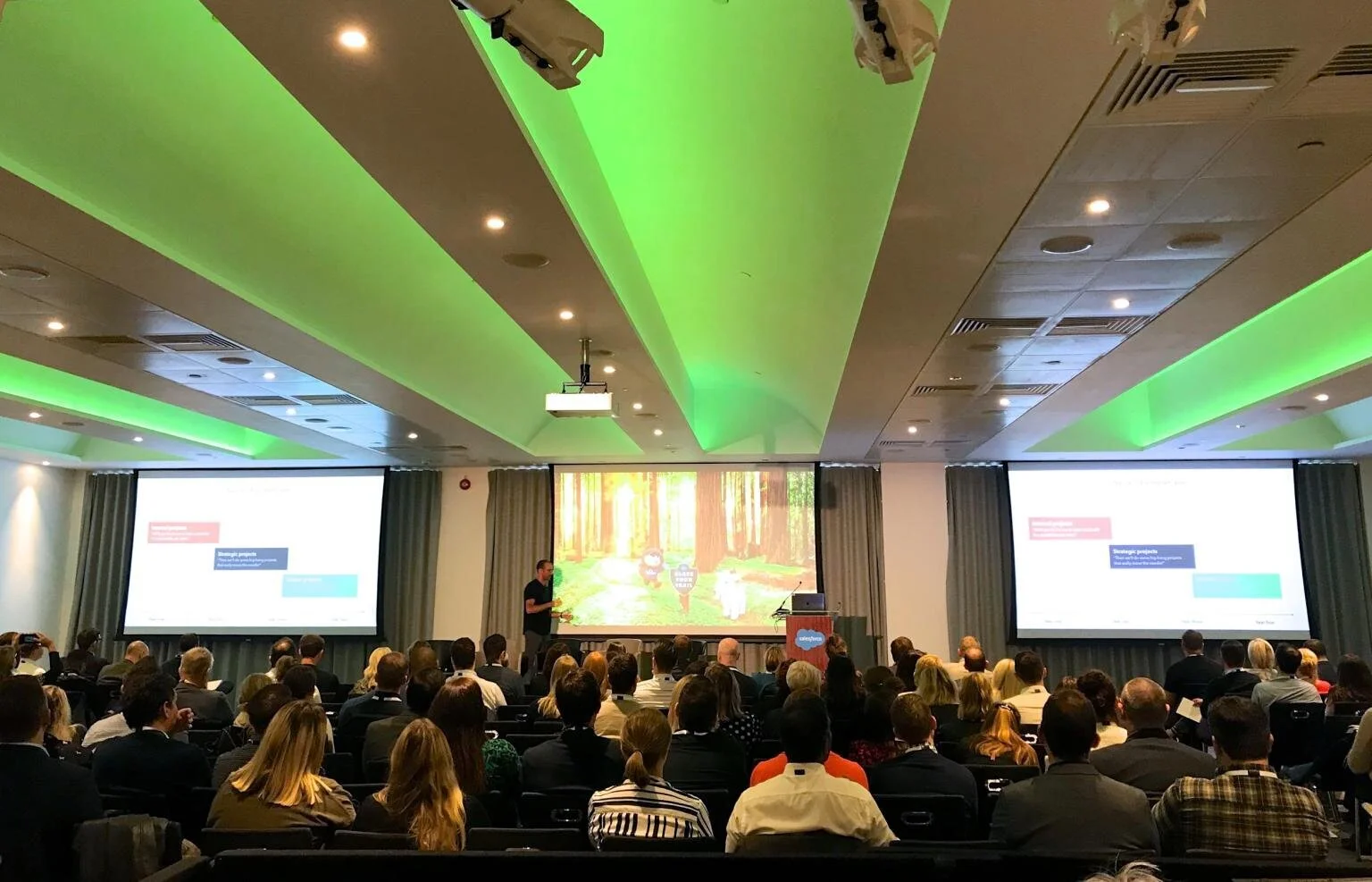
The Leader’s Guide to CX was the top rated talk at last week's Salesforce event. Since I'm often asked for speaking advice, this seems like a good time to share some tips:
1. Work with the organizers on the brief
Ask what success looks like for them AND the attendees: What are the key themes? What are people hoping to learn? How does your talk fit into the agenda?
2. Research the audience
If it’s a B2B crowd and you deliver a canned talk full of B2C examples they’re going to think you’re a moron. If it’s a small group research attendees individually.
3. Never give the same talk twice
To give the best presentation for each event and audience you'll need to customize what you have or even start from scratch.
4. Rehearse
I ran my full presentation 20 times, including 3 runs back-to-back to build stamina and sear the contents into my memory.
5. Seek out criticism
I sent recordings of my rehearsals to people who are hard to please. Yes, they were critical. No, I didn’t care —their input made the end result better.
6. Have a ritual that puts you in the zone
I always listen to the same playlist, eat the same food and do the same stretches beforehand. It makes me feel calm, energized and ready to rip - just like you'll be.
Train hard, fight easy. Good luck!
See this post on LinkedIn

There’s no formula for what makes people successful — they come in all shapes and sizes, of course. But I’ve spent enough time with people who are the real deal to spot some common themes.
There’s typically a quiet confidence beneath their outward modesty. Ambition, obviously, but tempered with levity and good humour. They tend to listen more than they speak, but when they do talk, it’s always “we” not “I”. They lead, but in service, and are keen to apportion credit where it’s due.
Spending time with Covalen's leadership team — when preparing for and participating in their brand launch in Dublin last week — these qualities and more were plain to see. I may have been invited there to speak, but I’ve far more to learn from them, than them from I.
It was a pleasure to be a part of the launch event, and I wish everyone at Covalen the best of luck with their new venture. That said, with their experience, commitment to customer-centricity and people craft, it’s the other players in the market who’ll be needing the luck, not them...
See this post on LinkedIn
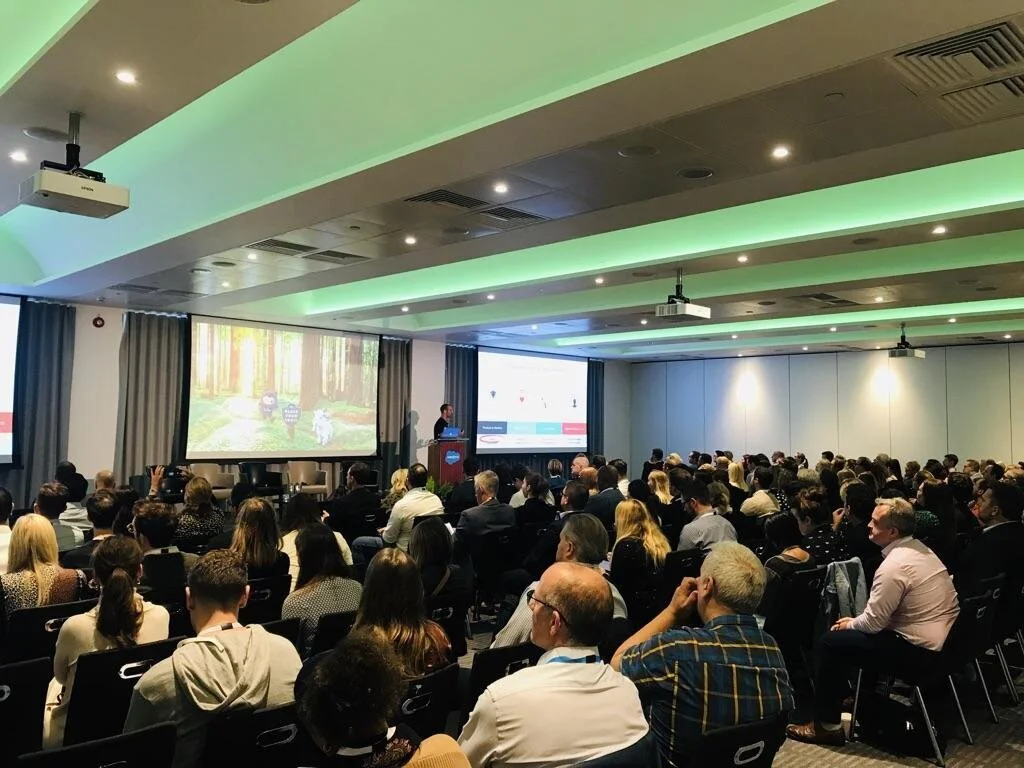
I gave the keynote at Salesforce's Service Summit in London yesterday morning. Here’s the general gist of my presentation:
1. Treat customer experience as a means not an end
Don’t set out to create a great customer experience. Start by identifying a business challenge or opportunity, then ask how improving the customer experience might help address it.
2. Avoid the satisfaction trap
Satisfaction doesn’t measure the customer experience, it measures perceived value. Since this is most influenced by factors beyond the control of CX teams, trying to prove your success using satisfaction scores is asking for trouble.
3. Move fast and fix things
Spend less time strategizing and more time fixing broken stuff. Gain momentum through action, not talk.
4. Define an experiential signature for your brand
Focus on being known for a couple of things that help strengthen the brand, rather than pursuing a potpourri of disjointed initiatives.
5. Manage expectations
Our memory of events influences our future decision-making. The more something deviates from our expectations the more memorable it is, so if you don’t understand expectations you’ll struggle to know where to focus.
6. Use psychological principles to make improvement a systematic process
No surprise coming from me!
See this post on LinkedIn
It's a fact of life that — regardless of the endeavour — quality, scope and time are intrinsically linked. Achieving mastery in a field takes decades of monomaniacal focus; the broader the scope of activity the longer it takes to achieve a given level of quality; and to get a lot done in a short time, we have to accept that things will be rough around the edges.
That's why most successful people say no to most things. If we want to do better, we have to do less because our time is finite.
As a guiding philosophy, less but better also applies to improving the experiential dimension of a product or service. The longer it takes to deliver an improvement the less impact it typically has, because the world can easily turn in the meantime. Years of practice have shown me that what customers appreciate most is a combination of brilliant basics and thoughtful details. Neither are typically accomplished when the scope of work is too broad because there's less time to consider each requirement.
If you aspire to deliver an exceptional customer experience then, try narrowing your scope, prioritizing more ruthlessly, and delivering what remains in focused, sequential iterations. This ultimately reduces risk, saves time and increases impact.
Less, but better then. And faster too.
See this post on LinkedIn
We instinctively avoid situations that create unwanted stress in our lives, naturally gravitating towards the brands that are least stressful to deal with. As such, eliminating stress is a powerful way to improve any customer experience. If you’re a CX pro, UX or service designer, here’s how to do it:
1. Improve reliability
Being unreliable creates stress. Without reliability there can be no trust, and with no trust, no loyalty. Reliability beats occasional delight hands down.
2. Prevent errors
Mistakes cause stress, and stress causes mistakes, so reducing the possibility for error and making recovery easier is crucially important.
3. Simplify choice
Too much choice is overwhelming. Simplify choice and you'll replace confusion with money in the till.
4. Clarify the reason for tasks
If you ask customers to do something unusual or unexpected, explaining why makes a huge difference.
5. Provide frequent, responsive feedback
Nobody likes being kept in the dark. The better informed we are, the less anxious we are.
6. Consider the customer’s competence
When a task is beyond our ability we quickly get flustered. Design for the customer’s level of expertise and you'll eliminate a common stressor.
Six simple guidelines, a world of opportunity!
See this post on LinkedIn



I saw a video recently where the famous architect Richard Rogers talked about his watch — the Accutron Spaceview — which rather than hiding its inner workings reveals them through a transparent face. Roger’s most famous building is the Centre Pompidou, which — inspired by the watch — also has its parts on display.
Tinker Hatfield, another design icon, studied architecture before becoming a shoe designer. His most famous design is the Air Max which proudly shows the inner structure of the air cushion through a window on the sole. His inspiration? The Centre Pompidou.
A watch, a building, a shoe. The same idea: three different products.
A simple route to more innovative or creative solutions is to “lift and shift” ideas from one domain to another. But when we’re under pressure to deliver we tend to do the opposite — recycling well-worn solutions from our own field. This is ultimately self-defeating, since we all end up converging on standard solutions so don't stand out in the market.
To avoid this trap, it pays to keep an eye out for concepts you can steal from elsewhere. Once you start looking you’ll see opportunities everywhere. Best of all, it’ll keep you inspired, stop you from sliding into a rut, and help you consistently produce more innovative, distinctive work.
See this post on LinkedIn
Keeping your customers well informed is a simple yet remarkably powerful way to improve their experience. While there's no need to bombard people with updates, proactively providing prompt, precise feedback is generally a good idea when:
1. A task is successfully completed - “Your bank account has been closed.”
2. A process begins, milestone is reached or there is significant progress - “Your order is on its way.”
3. There’s a change of plan (for better or worse) or new information - “Your delivery will arrive a day early / We substituted your broccoli for kale.”
4. There’s been a mistake or a process fails - “Your billing address update didn't go through.”
5. There’s been a significant passage of time without any communication - “Everything is going according to plan with your watch repair.” I
ncidentally, these are all pieces of feedback I wish I’d received recently, but didn't.
One last tip: The more important something is to the customer, the more valuable these updates become. So if you’re going to work on this aspect of your customer experience, consider starting with the high stakes scenarios first. The greater emotional involvement invokes greater appreciation.
See this post on LinkedIn
If you’re a CX professional, UX or service designer and want to create a totally effortless customer experience, here are nine ways to do it:
1. Eliminate duplication
You'll be amazed how many tasks are needlessly repeated once you start looking.
2. Prevent errors
Mistakes create re-work, so preventing them saves time and energy.
3. Remove unnecessary interactions
A click here, a step there — with a critical eye you'll find plenty that can be cut out without affecting functionality.
4. Do it for the customer instead
From setting smart defaults to carrying customer's bags to the car, the more you do for them the less they need to do.
5. Reduce wait times
Whether it's same day delivery or fast-loading web pages, speed and responsiveness make experiences feel less onerous.
6. Use simple language
It's easier to digest.
7. Increase convenience
Make things available in the time and place that best suits the customer.
8. Simplify choice
The easier it is to choose between options, the less time and brain power it takes.
9. Follow conventions
They allow people to do things on autopilot.
Systematically apply these simple techniques, and you'll create experiences that customers love and rivals hate in equal measure.
See this post on LinkedIn
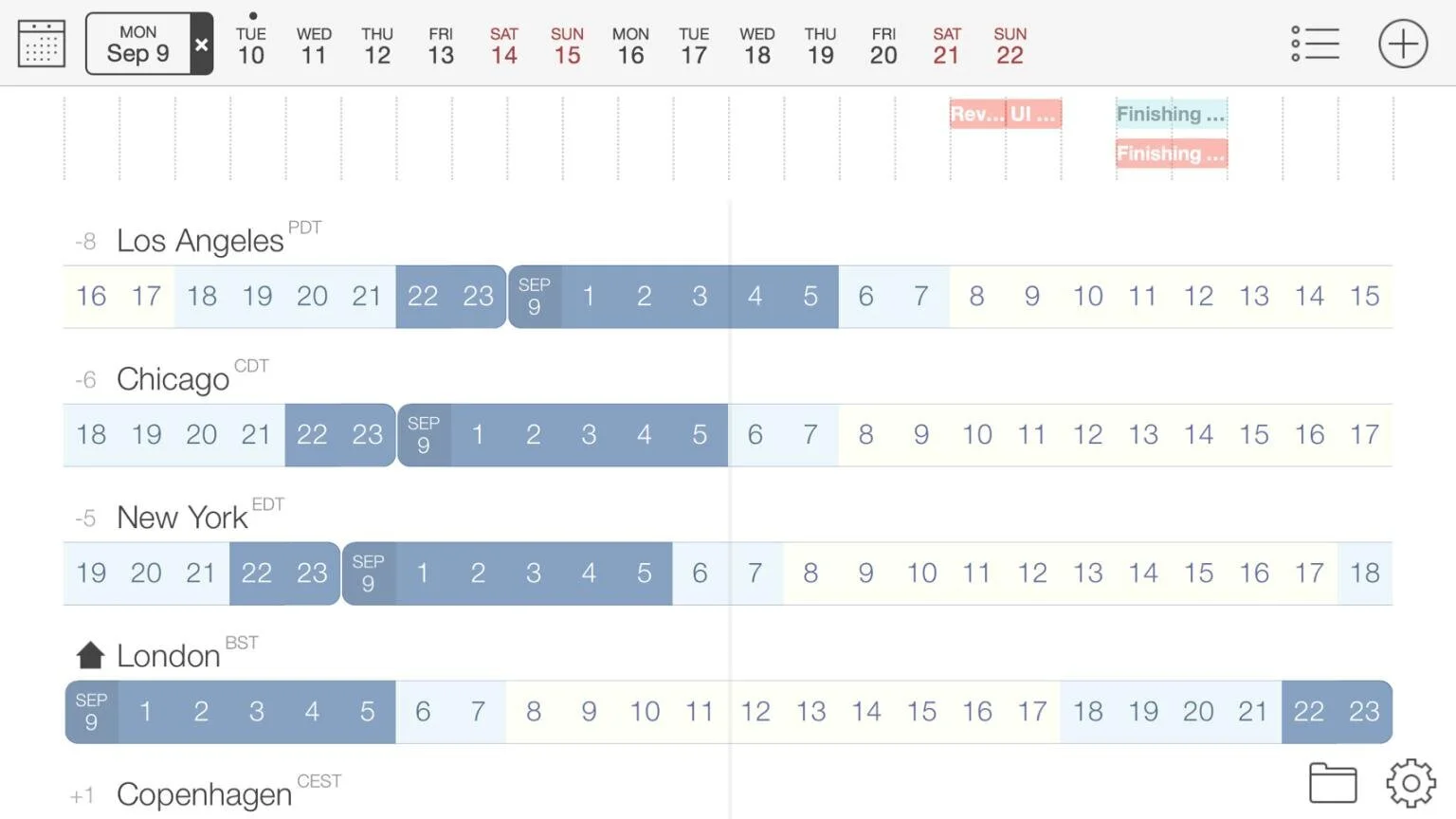
I’m a big fan of simple products that make frequent tasks a little easier, and here’s one many of you will find useful. Time buddy is an app that shows the time for any time zones you set up side by side. It also shows events in your calendar and what time they’ll be happening in those different zones.
With colleagues, clients, friends and family evenly distributed across the globe this little app has made scheduling meetings and calls, or just knowing what’s happening when and where a little bit easier. It also has a widget if you’re an iPhone user. Well worth a couple of bucks if you’ve got stuff going on abroad!
See this post on LinkedIn
In 1967, a young architect set up a new firm. Starting from scratch in a London bedsit, they had no clients and just one lead - to design a toilet block for a dockyard.
He scheduled a meeting with the lone prospect, arriving well in advance with a camera and notepad. Observing the workers, he realized that relocating the block closer to the warehouses could improve productivity. Unfortunately this was impossible, he was told. The plan was already approved.
Undeterred, he secretly revisited the site several more times to come up with a workable solution; eventually realizing that a structure could be built on stilts between the warehouses. This would allow trucks to pass underneath, minimizing disruption.
At subsequent meetings, his impassioned, well-reasoned argument not only convinced the client to support the project, but to expand it into a full amenity center. The result was such a success that IBM commissioned him to design their new head office.
The man in question is now Sir Norman Foster — perhaps the most successful architect in the world.
The moral of the story: there are no boring, menial projects. With enough energy, curiosity and commitment, any piece of work can become a showcase for your skills that leads to new opportunities.
See this post on LinkedIn
If you stop looking at job titles and start looking at who controls what resources, you’ll come to an under-appreciated realization: nobody has more influence over the customer experience in most large organizations than the CIO, regardless of who is responsible for it on paper.
The days of IT being order takers and the people you call to fix your printer are long gone. The modern CIO is a strategic lynchpin and often in the driving seat when it comes to the digital transformation programs that are en vogue today.
They typically also own the platforms that enable or prevent your CX vision from becoming reality, and the systems that provide the data you need to measure the performance of your CX initiatives. With their support progress will be far easier. Without it you’ll be up a certain creek without a paddle. So what should you do?
Make the relationship with your CIO a priority. Listen, learn and share. Understand what makes their life easier and how you can work well together. Welcome them and their team to the CX table. Involve them as early as you can. Collaborate.
Treat them as a valuable partner and you'll reap the benefits.
See this post on LinkedIn
It is common sense that a customer's expectations affect their satisfaction. But where do their expectations come from? There are seven key influencing factors to be aware of:
1. Communications - "This is what the salesman told me"
2. Brand associations - "This is the kind of thing I expect from Ryanair"
3. Alternatives - "This is how Amazon does it"
4. Learned behaviors - "The shopping cart should be in the top right corner"
5. Past experience - "I got a huge discount last time"
6. Word of mouth - "Brian told me the app is easy to use"
7. Situational factors - "It's urgent, I'd appreciate you making an exception"
We can also think of expectation issues as falling into one of three camps:
1. Absence - No expectation was set
2. Dissonance - Saying one thing but doing another
3. Inference - Strong external sources (friends, competitors etc.) creating an incorrect expectation
Use these simple categories to bring some structure to your work if you’re trying to understand or explain how expectations are affecting customer perceptions. You can also use them to form research hypotheses, or sense-check new ideas and solutions.
See this post on LinkedIn
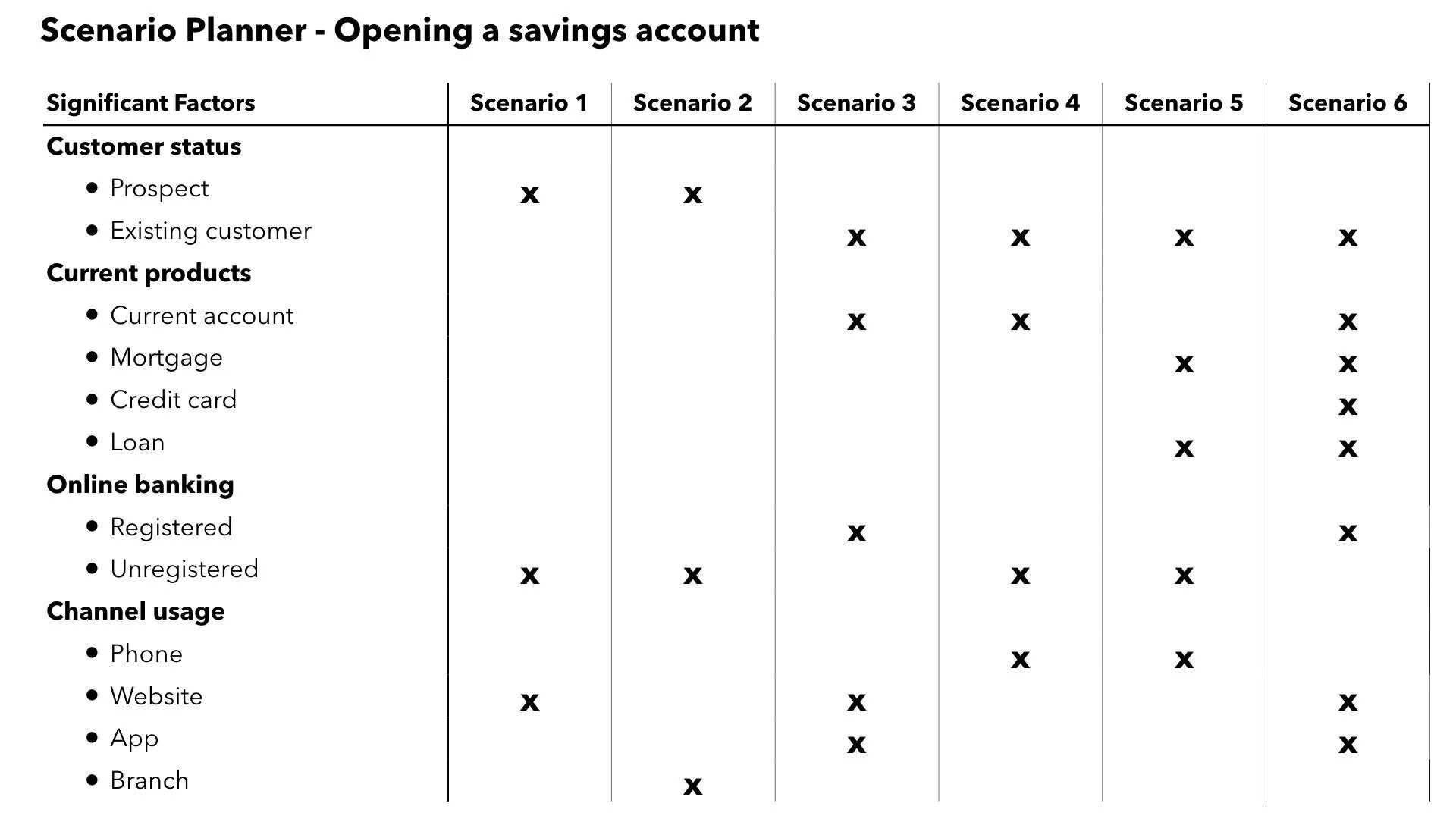
Thousands of articles have been written about journey mapping, but very few tackle a fundamental issue: How do you decide what journeys to map, especially if it’s a new concept? If you’re a CX, UX or service designer this neat little trick can help.
Here’s how to do it:
1: Brainstorm a list of significant factors relating to your customers or their scenario. This can be anything: their goal, their expertise level, the existing products and services they use, the channels available to them, whether they're a new or repeat customer, etc. There are no rules - just try to capture every relevant factor in the rows of a spreadsheet (see pic).
2: Identify common combinations of these factors — E.g. A new customer, without an account, low expertise, no existing products, using our website, to learn about our offerings — then give each combination it’s own column in the spreadsheet (see pic).
3: Prioritize and consolidate the scenarios (you’ll usually find that a handful of them cover most permutations).
4: Use these scenarios as the basis for analyzing their journey.
Two huge benefits:
1. Less risk of missing important factors and considerations
2. Better and earlier alignment about what you’re actually designing!
See this post on LinkedIn
If you’re involved in customer experience, UX or service design there are four browsing/searching behaviors that are crucial to understand and consciously design for — especially if you're selling things.
Discovery
These people are just nosing around — maybe they just heard about the brand, or walked in out of curiosity. Your goals: get them familiar with your brand and range of products or services, establish a relationship / dialogue and entice them to look more closely.
Categoric
These people know the kind of thing they want — a savings account, MIG welder, whatever — but aren’t sure exactly which one is best for them. Your goal: become an ally in their decision-making. Communicate the rationales of each offering clearly, facilitate comparison, and demonstrate trustworthy expertise.
Known Item
These people know exactly what they want. Get them straight to the product or information they want with minimal fuss.
Re-finding
Many don’t buy on a first visit, browse extensively, or want to re-purchase. Making it easy to re-find things later will ultimately help you sell more. Nail 'em all and reap the benefits.
Disclosure: I learned this from a blog 15 yrs ago and adapted it over the years. To whoever wrote it — thanks for all the times you made me look smarter than I am.
See this post on LinkedIn

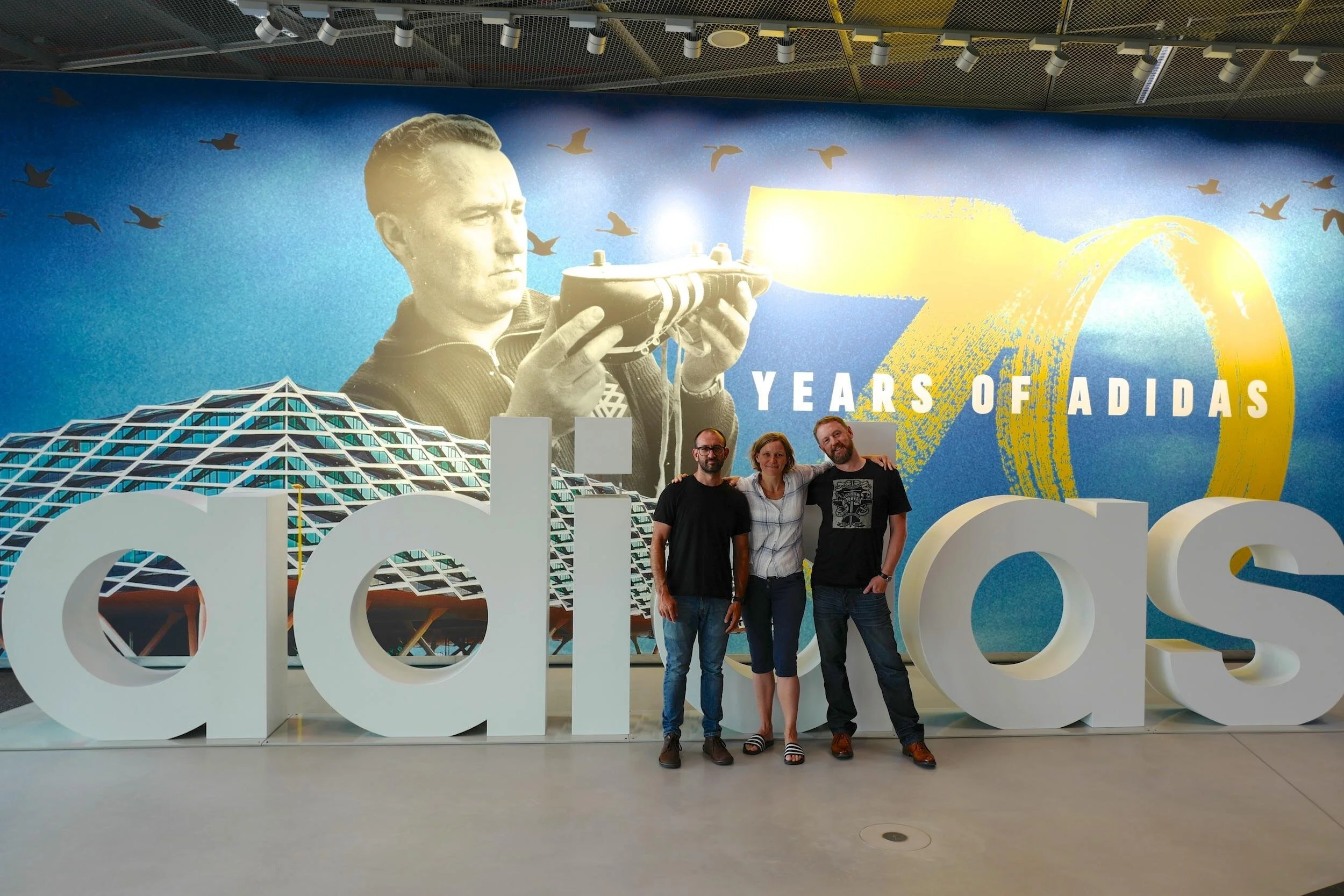
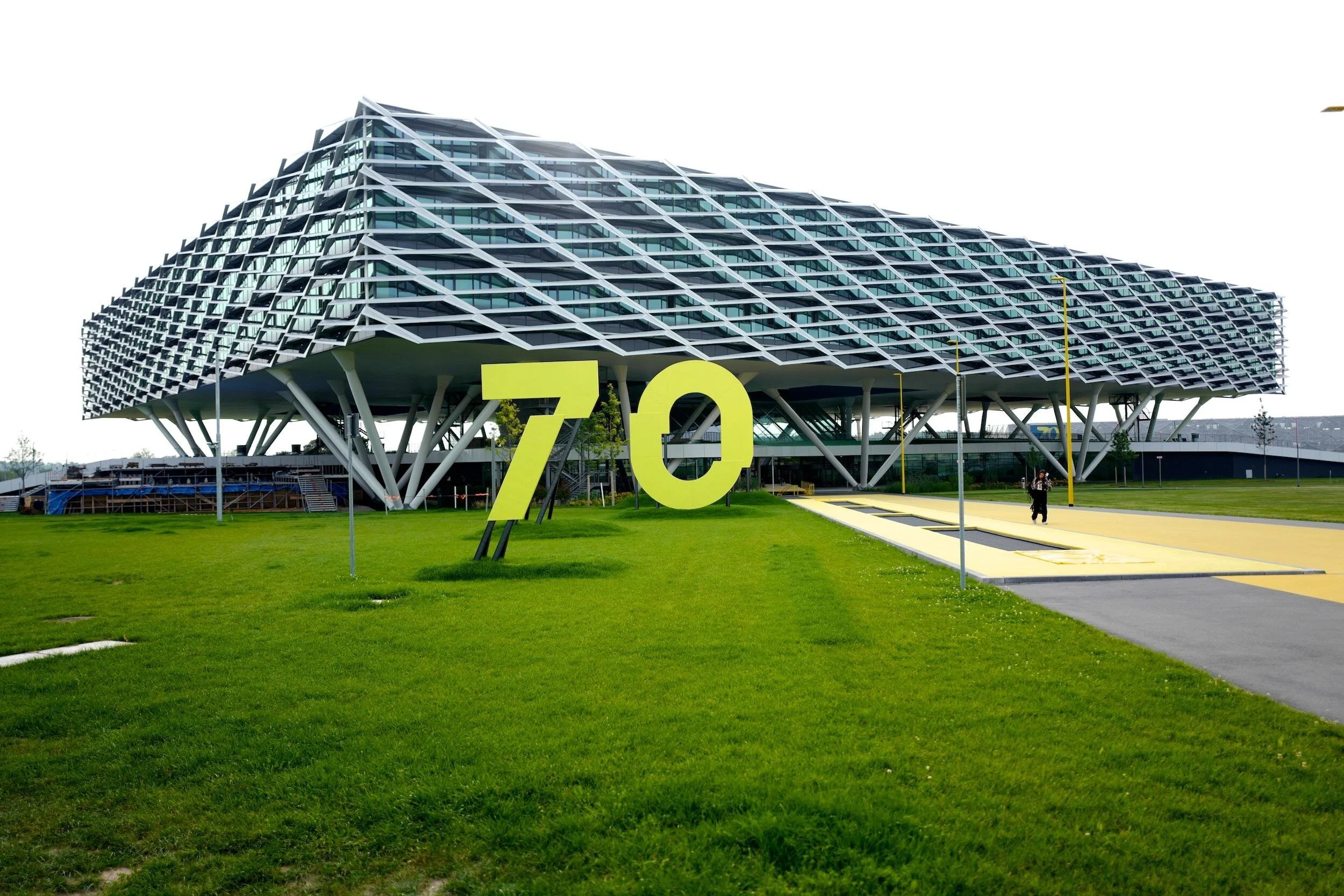
LinkedIn can be a really incredible platform if you approach it with the right mindset — an openness to new ideas, a willingness to share, and a readiness for dialogue. You light your little beacon and see who’s drawn to it, and with a bit of luck you can compare notes with some really smart people. They might benefit from your experience in some way, but more importantly they can challenge your ideas and contribute their own. Everyone benefits.
This brings me on to Jeanette Sjoberg. We connected in 2013 after the ten principles book came out and have been in touch from time to time since, most recently when she asked me for an opinion on a couple of topics in her master’s thesis.
We ended up talking on the phone for an hour or two about all sorts of CX, design and business stuff, and I took a lot more from the conversation than I contributed, including a fresh stack of books in the shopping cart.
When I mentioned we were in Germany for a couple of days not only did she invite Ben and I round for a BBQ, she took us to Adidas for the day. We had a tour of their amazing campus, met some really smart people working on some fascinating projects, and managed to squeeze in a quick session on The Grid in the process.
Thanks so much Jeanette - what a way to put a face to a name!
See this post on LinkedIn
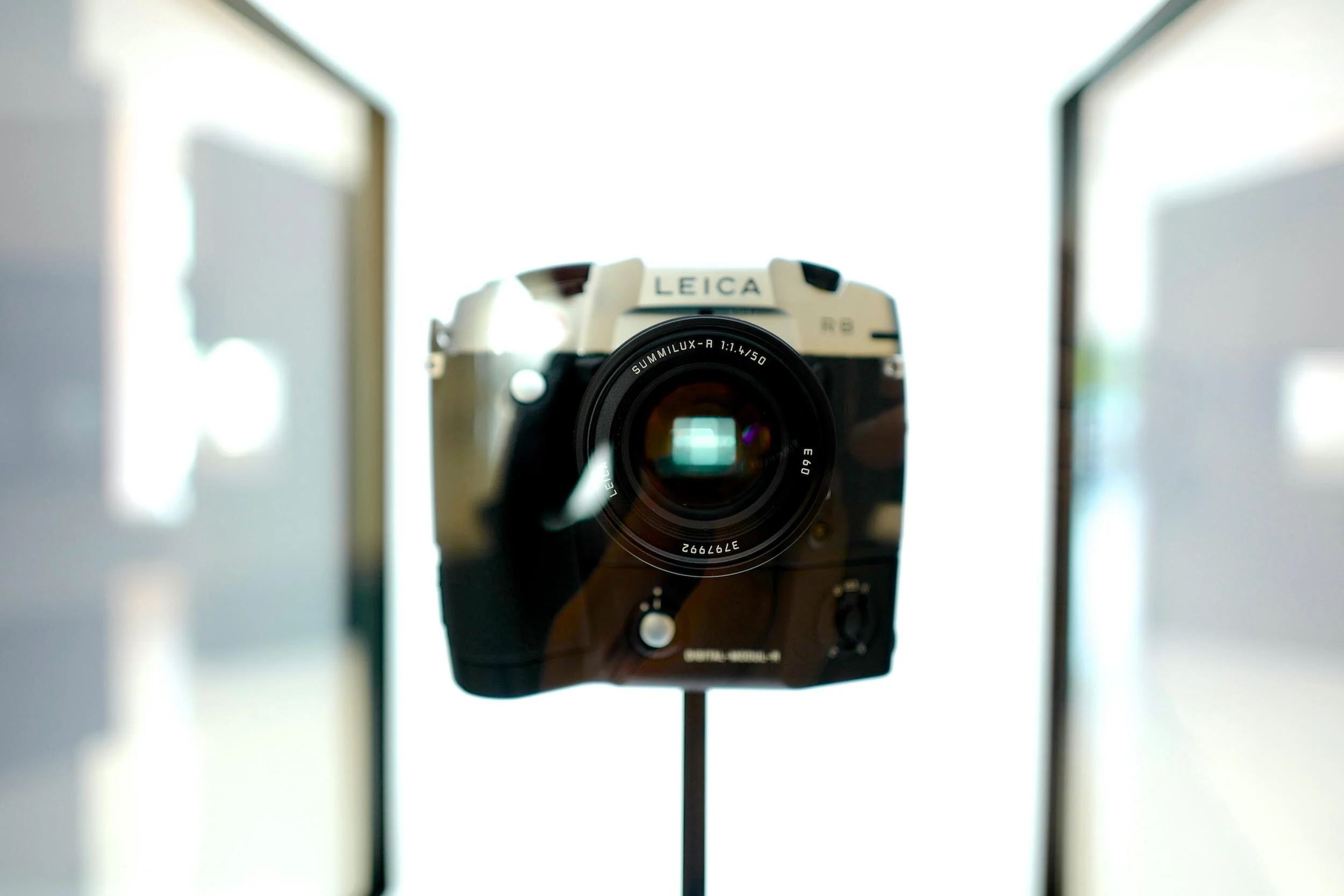
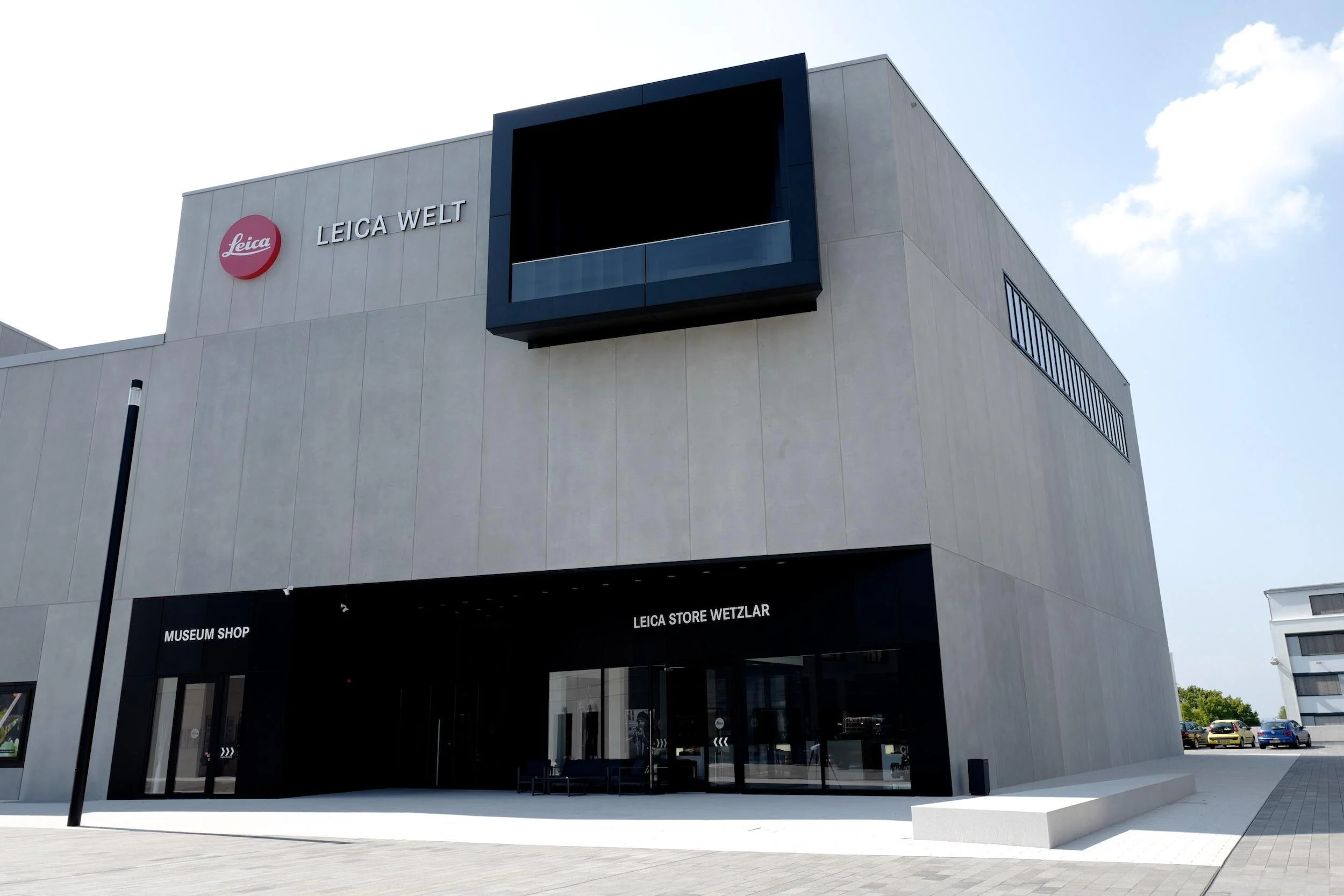

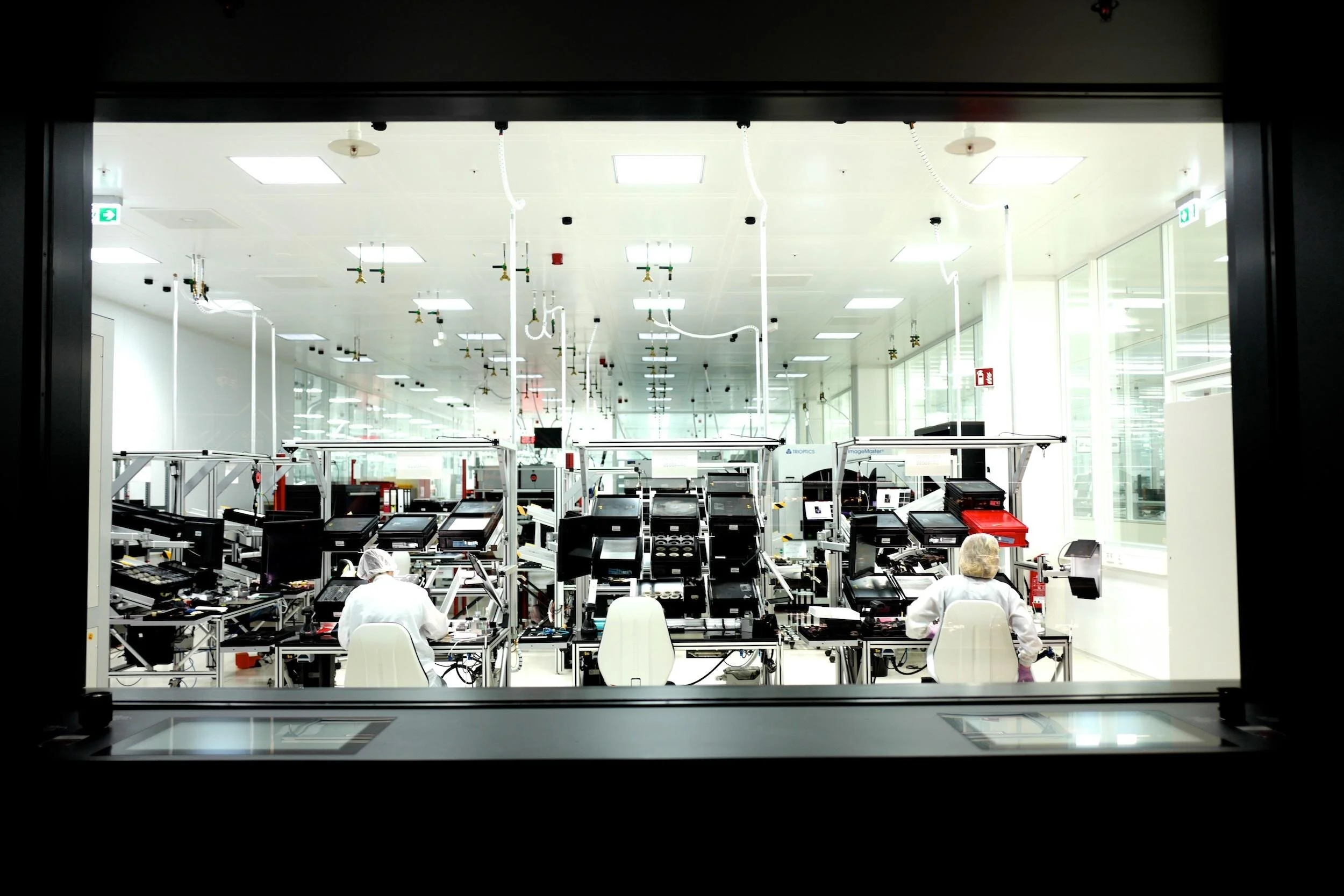
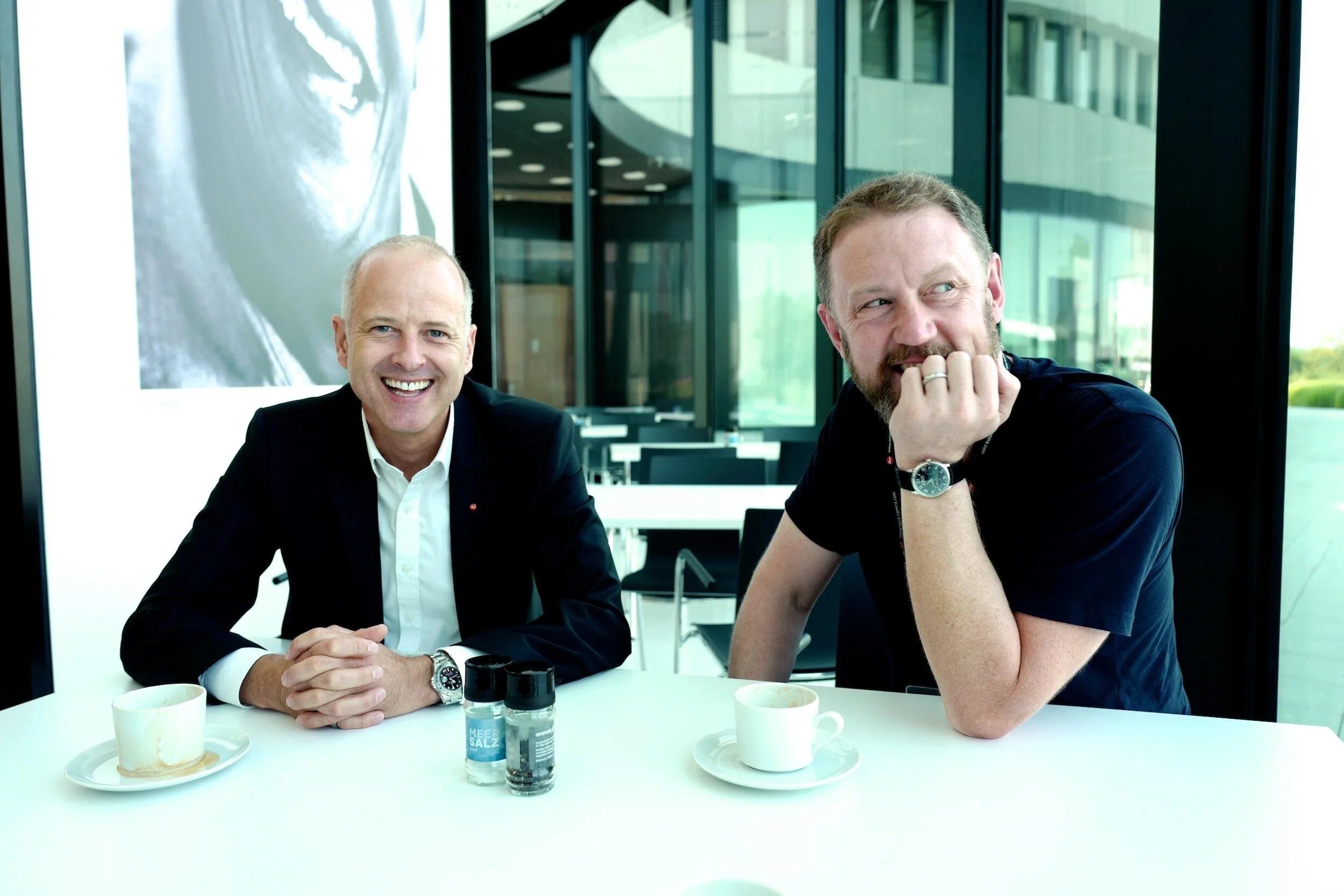


An occasional perk of the job is the chance to see behind the curtain at a company you have a personal fondness for. As keen photographers and design obsessives, one such brand for us is Leica, whose cameras and lenses are as famous for their unsurpassed quality as the iconic photographs they’ve produced.
Needless to say, when Ben Smith and I were invited to tour the factory and meet with members of the retail, service and customer experience teams it was a dream come true, and the experience did not disappoint. Seeing first-hand the care that is lavished on making and servicing their products immediately recalibrated our quality benchmarks.
A huge thank you to Cathy Tabatabaie (Inman), Marc B. Wälti and the team for hosting us, and for the rich dialogues about all things CX. It was an incredible privilege and an unforgettable experience.
See this post on LinkedIn
We'll celebrate our son’s first birthday in 2 weeks. It’s been quite a year (for him and us) not least of all because I travel frequently for work, and since I’m rather fond of him, we often hit the road as a family.
Whenever we book a hotel we let them know we’re traveling with a baby. So what do they do? They put a cot in the room.
Astonishingly though, no hotelier yet has considered whether there’s anything else we might find useful. Like: a nappy/diaper bin, changing table, power socket covers, a high chair…Any one of these trivial additions would guarantee gushing praise, and you’d only need a few sets for the whole hotel.
There’s a lesson here beyond basic attention to detail. Because most things are designed for a mythical average user, those with unique requirements — parents with toddlers, wheelchair users, vegans, etc. — typically have a sub-standard experience and the expectations to match.
This means even the slightest display of consideration for their needs becomes a remarkable, memorable experience. And purely out of convenience and risk aversion, they are likely to default to purchasing from your brand next time.
A tip then: look out for customers with unique needs and do a little more to satisfy them. The returns could be far bigger than you think.
See this post on LinkedIn