
These posts are duplicated from LinkedIn, where they’re seen by tens of thousands of people each week. They often spark lively, valuable debate and your voice would be welcome. Visit my profile to connect with me.

I haven't shared anything on Linkedin for a little while but with good reason — if I have to choose between actually doing the job and talking about it, I choose doing.
It’s great to be known as a writer, get invited to speak at events and share ideas, but there’s a real danger that comes along with these things:
The more time you spend talking the less time you spend doing.
The less time you spend doing, the less in touch you are with reality.
The less in touch you are with reality, the less relevant you become.
The people I’ve always admired most are do-ers. Practical people. Engineers, designers, inventors, craftsmen, cooks, mechanics...anyone who rolls up their sleeves and makes things, or makes things happen. I’ve always aspired to be one of those people. Lately though, I’ve found myself preaching more and practising less, which doesn’t sit well with me.
Fortunately we’ve won some great new clients recently, who are relying on us to deliver some amazing and challenging projects. The perfect opportunity to get back in the trenches with the rest of our amazing team.
I'm excited to re-connect with my real passions — solving complicated problems, and designing stuff that improves people’s quality of life.
See this post on LinkedIn
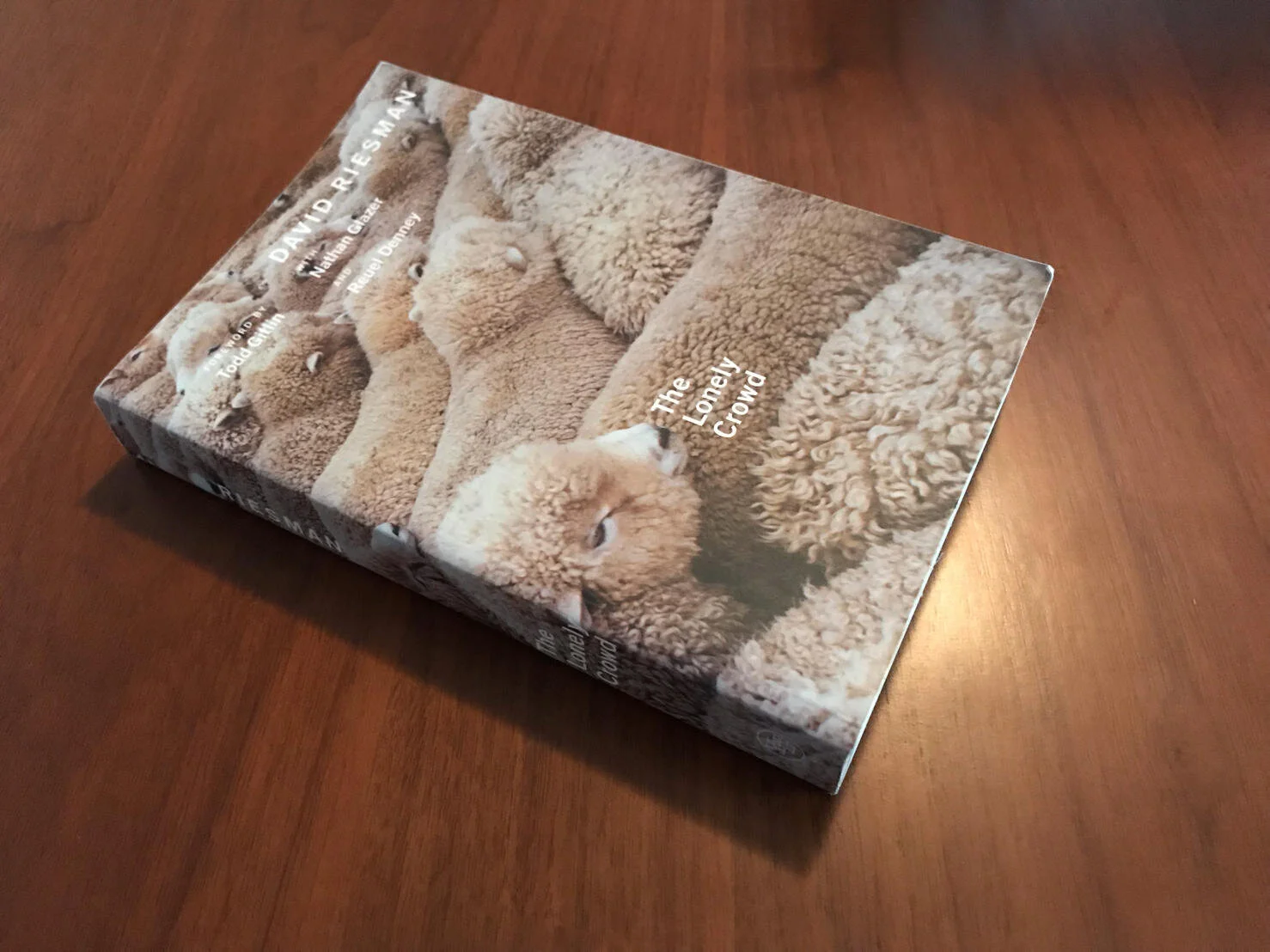
This week’s obscure recommended reading — The Lonely Crowd by David Riesman, “Considered by many to be the most influential book of the twentieth century.” A bold claim but does it have merit?
Nobody with half a brain would dispute that this is a masterpiece. As I piled through the wonderful prose it was like a veil lifting.
The central thesis is that there are three orientations for individuals and society:
Tradition-directed, inner-directed, and other-directed (influenced most by a desire to gain approval from others).
The conclusion — an astonishing piece of foresight given the book's age — is that society is increasingly “other directed”. The popularity of social media, rampant consumerism, celebrity worship, and the rush to embrace every business fad provide ample evidence.
From Wikipedia: “Because large organizations prefer other directed personalities, they became indispensable to the institutions that thrived with the growth of American industry…today their triumph is complete.
But since the other-directed can only identify themselves by what they earn, own and consume… they are restricted in their ability to know themselves.
Such societies face profound deficiencies in leadership, individual self-knowledge and human potential."
An incredible read.
See this post on LinkedIn

It’s been a year since I signed up for Be My Eyes — an amazing service that I highly recommend joining. Here’s how it works.
You download the app and sign up as a sighted volunteer. When a blind or low-vision person needs help they video call you and you help them.
Last night for example, I helped someone identify which button on the remote for an AC unit turned the temperature up and down, and what the current temperature was. I’ve also helped with really simple stuff like which is the salt or pepper, or reading a sign.
As somebody who is involved in creating experiences for people, participating in this service has been amazing. First, it’s nice to help people — I think it’s a cool idea that’s worth supporting. Second, it’s an extremely valuable reminder about just how critical the sensory dimension of experience design is, and how often we all (myself included) overlook accessibility requirements.
Even for people with no sensory impairments, almost every product or service I use can be improved by thinking about affordances, ergonomics, poka yoke (error proofing), legibility, progressive disclosure, clear groupings, and all the other tools in the interaction design arsenal.
Here’s a link to Be My Eyes so you can find out more and sign up!
See this post on LinkedIn
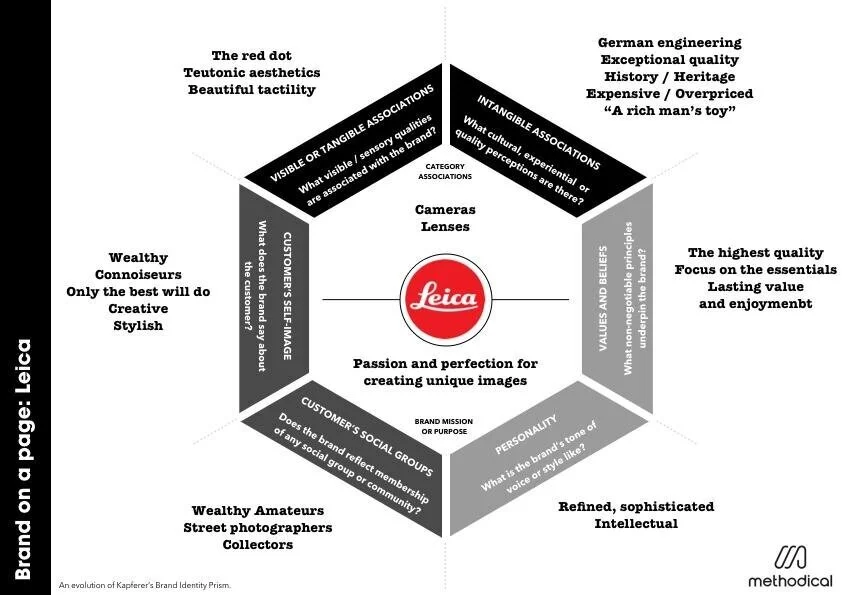
A couple of years ago I was looking for a way to show all the key aspects of a brand on a single page to include as part of the briefing materials when starting CX projects.
The closest thing I found was Kapferer’s Brand Identity Prism but the language confused me and thought it could do with adding a couple more elements — a massive over-reach for a CX guy I know — and I'm sure some of the actual brand experts will not be impressed.
Anyway, I started tinkering with the Prism a little and the result has worked quite well — with nothing but respect for Kapferer, I think this slight evolution is a little clearer and more complete.
We use it to not only show all the facets of a brand on a single page as part of a briefing pack, but also to try and highlight gaps between internal and customer perspectives in separate outer rings that we might want to close through the CX program. You could also do an “as is” and “to be” version. It's pretty flexible.
I used Leica as an example using extracts from their website and Brand Balance magazine.
If you’d like the blank template, just like the post or send me a DM. Credit where it's due - please check out Kapferer's work!
See this post on LinkedIn
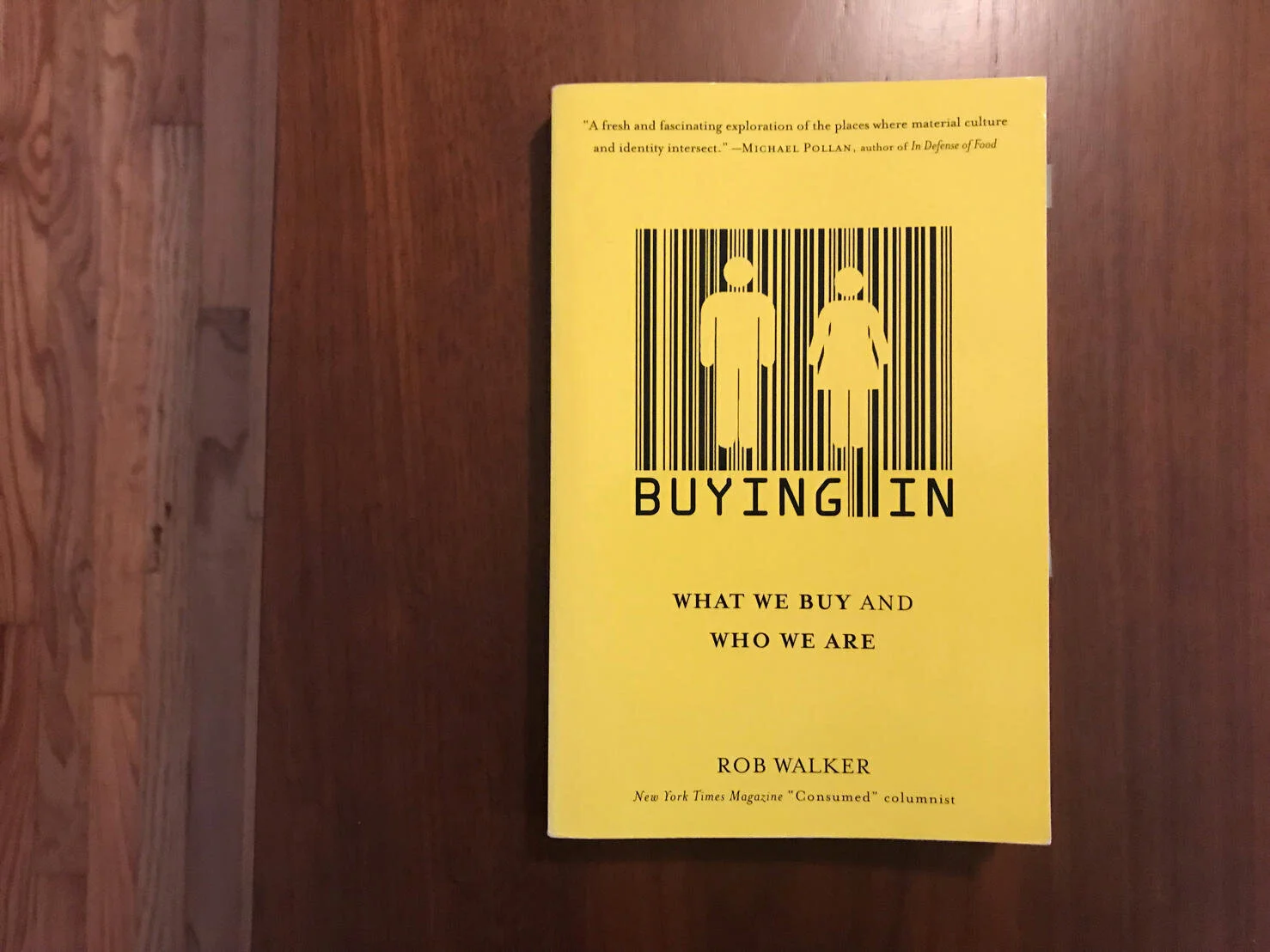
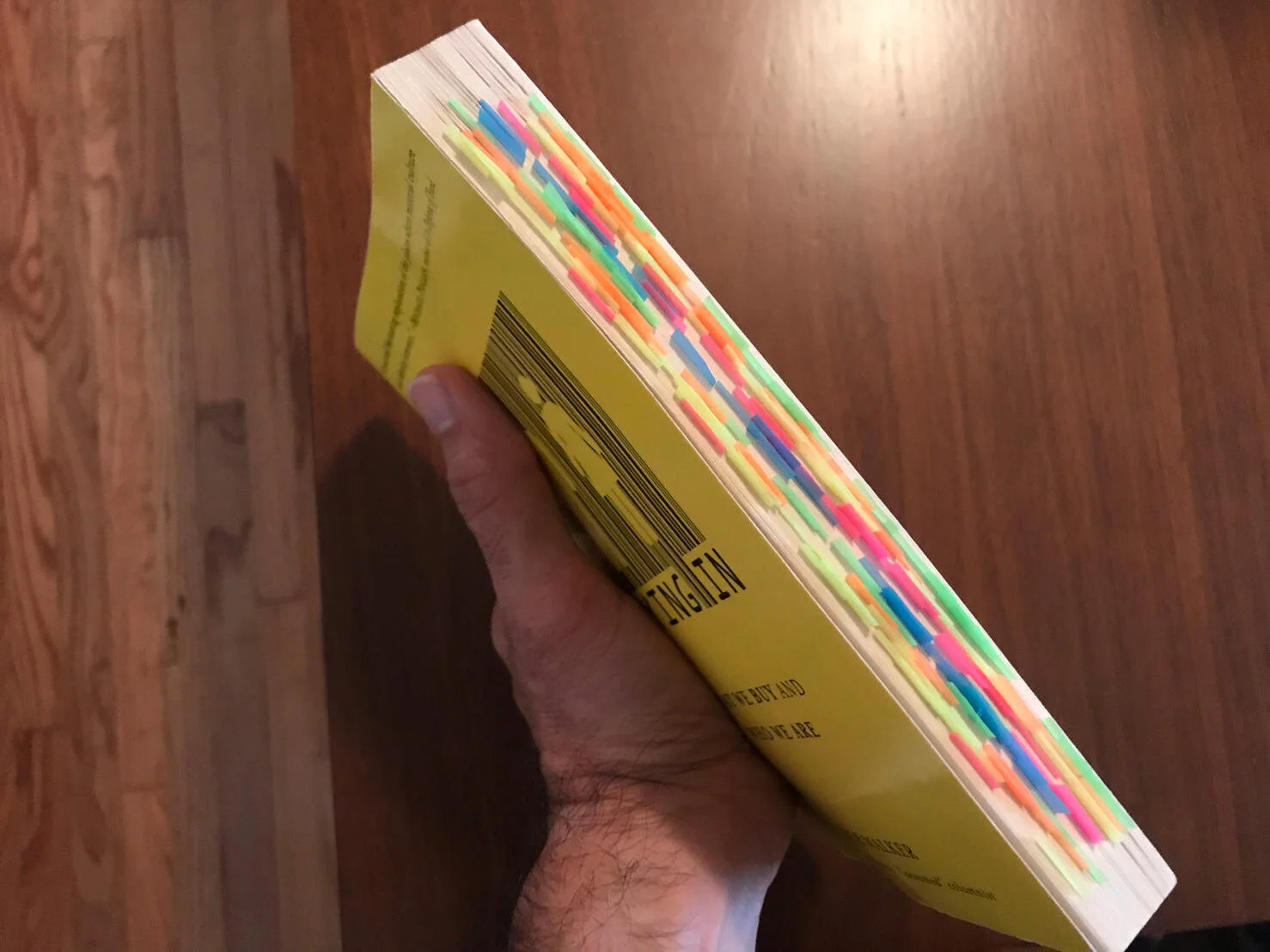
This week’s obscure book recommendation: Buying In - What We Buy and Who We Are.
In researching the Ten Principles book I must have read this one four or five times, and in a way it set me off down an intellectual trajectory that I’m still on — trying to understand why we like what we like, value what we value, and buy what we buy.
This book (along with a handful of others) is the reason I concluded that the first principle behind creating a great customer experience is to reflect the customer’s identity.
From the back cover:
“Brands are dead. Advertising no longer works. Consumers are in control. Or so we’re told…this accepted wisdom misses a much more important cultural shift…Rather than becoming immune to brands we are rapidly embracing them…Walker demonstrates the ways in which buyers adopt products not just as consumer choices but as expressions of their identity.
(This book is) part marketing primer, part work of cultural anthropology…Walker unravels that tension between wanting to fit in and wanting to stand out, wanting to be unique, yet somehow attached to something greater than ourselves.”
To me this book is as relevant and thought-provoking today as it was when it hit the shelves ten years ago.
See this post on LinkedIn
Four things I’m always banging on about that can improve any interaction or experience:
Attention to detail - conveys thoughtfulness and quality
Error prevention - reduces effort and stress
Memorability - increases likelihood of future interactions
Distinctiveness - distances you from rivals
All of these things can be achieved systematically, the opportunities are everywhere once you know what to look for, and the cost is often trivial.
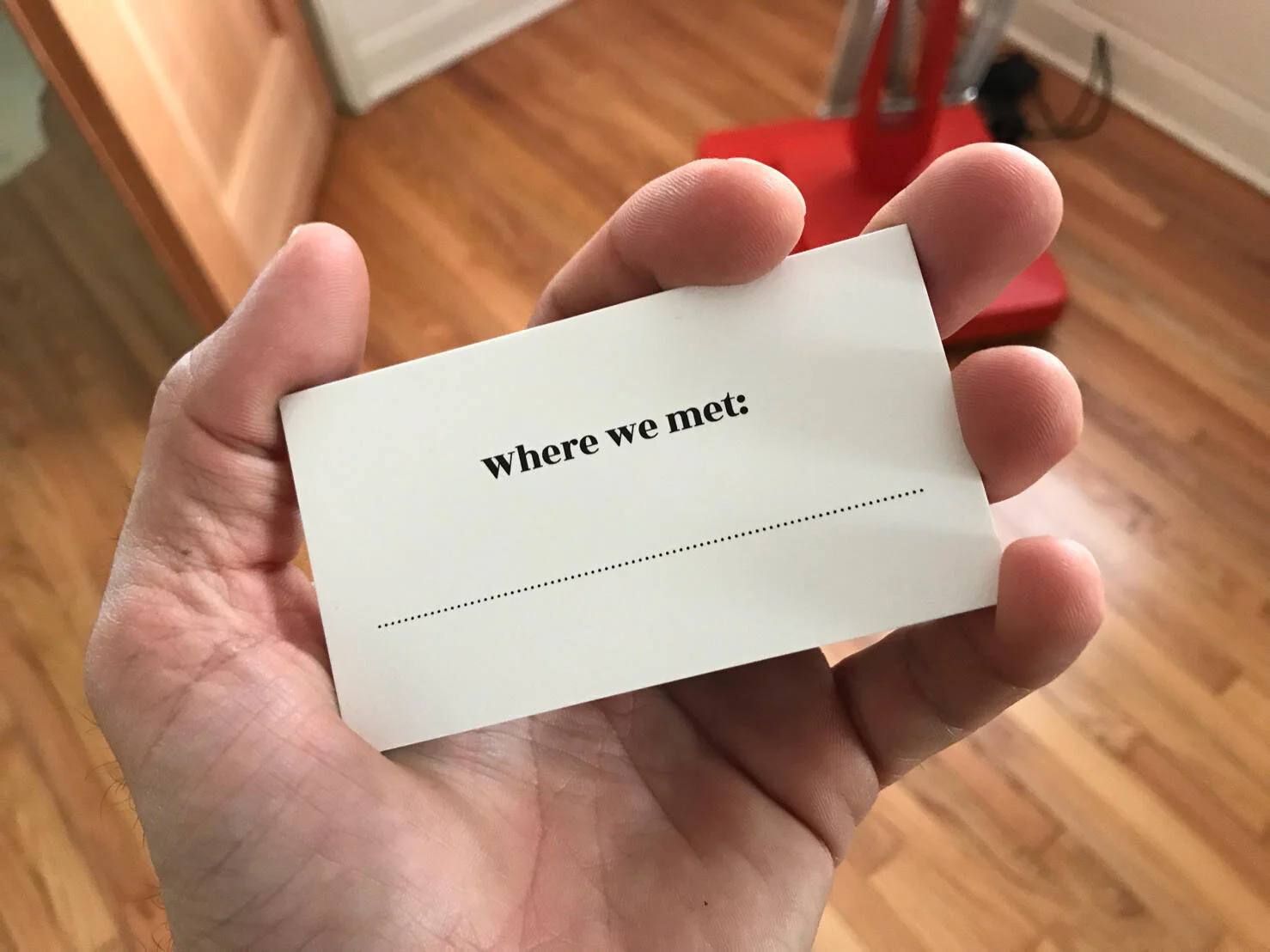
As an example, this is the back of our business cards, which have a little space to write a fun note about where we met — it makes people smile, serves a useful purpose and always generates positive comments.
For the life of me I can’t understand why this also isn’t a feature on LinkedIn.🤔
See this post on LinkedIn
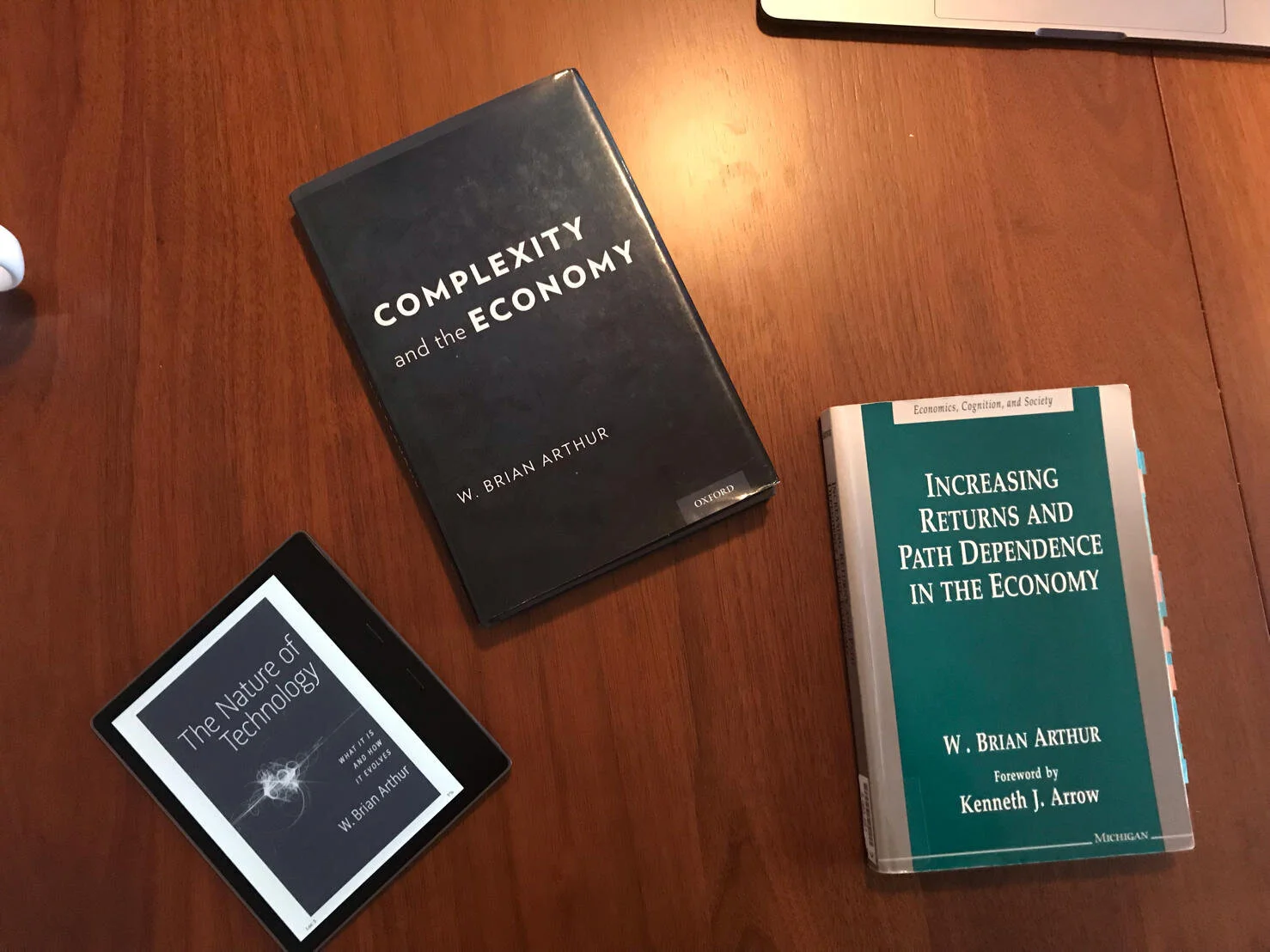
This week’s recommended reading explores renegade economist Brian Arthur’s work. In order of priority:
Very few books have shaped my understanding of the world quite like The Nature of Technology. I almost pity anyone in business who hasn’t read it. His profound insights about how technologies combine and evolve are absolutely fascinating. They offer a fresh set of lenses through which to view (and perhaps anticipate) the changing technologies that shape our world. Highly recommended!
Complexity and the Economy is an accessible collection of articles exploring the fact that the economy is not a well-oiled machine, it's a complex adaptive system. If you're into macroeconomics and system dynamics — and let's face it, who isn't — you'll be pleased as punch with this slim volume.
Last up - Increasing Returns and Path Dependence in the Economy. Yes, I should probably get out more, but I find subjects like path dependence (the idea that our previous set of decisions constrains our next) and increasing returns (as opposed to diminishing) strangely titillating.
Dense, impenetrable, and way beyond my comfort zone, I still found this strangely rewarding. Only pick this up if you think “Godel, Escher, Bach” is lightweight beach reading.
See this post on LinkedIn

If you’re looking for an interaction design masterclass, I recommend buying and installing an Eero router.
If you deconstruct what makes the set up process so good, you'll see it tracks back to the underlying principles in our book. Four in particular:
1. Leave nothing to chance
They have considered every step of the installation process. This conspicuous attention to detail reassures customers that they’ve bought a high quality product from the first interaction.
2. Make it effortless
By guiding the customer through a series of simple steps explained with clear language, Eero have make the process effortless. Extending your network is as easy as plugging in another box and pushing a button.
3. Make it stress-free
Two common stressors are risk of error and our perceived competence. Eero tackles both, even advising users how to position devices for maximum coverage. You basically can’t go wrong with the installation and feel like you’re learning something useful for the future.
4. Indulge the senses
Unlike most networking hardware the Eero has a sleek design that can happily sit on show in the room. The companion app has a beautiful UI with engaging informative animations.
Eero command a price premium over rivals. Amazon bought them for $97m. Principles work.
See this post on LinkedIn

Finally, the evidence we’ve all been waiting for! Here are some quotes from the report that constitute "definitive proof" NPS predicts revenue growth:
“This analysis found a modest correlation [between NPS and growth].”
“The correlation between NPS and future growth ranged from non-existent/negative to very strong.”
“Don’t expect [NPS] to perfectly predict the future in any time period.”
“We found little evidence to suggest that the NPS was superior to customer satisfaction…it offered similar predictive validity to satisfaction but not always and sometimes it was worse.”
“It could simply be that higher sales generate more recommenders and not that more recommenders generate more sales.”
One could just as easily conclude from this research that NPS is inferior to satisfaction as a metric, and is an outcome of growth not a driver - so possibly not predictive at all.
As for the idea that mild correlation = prediction: let’s say we find a modest correlation between people’s height and the distance they live from the equator. If I tell you how tall someone is can you predict where they live? If I tell you where someone lives can you predict how tall they are?
Of course you can’t. 🤣
See this post on LinkedIn
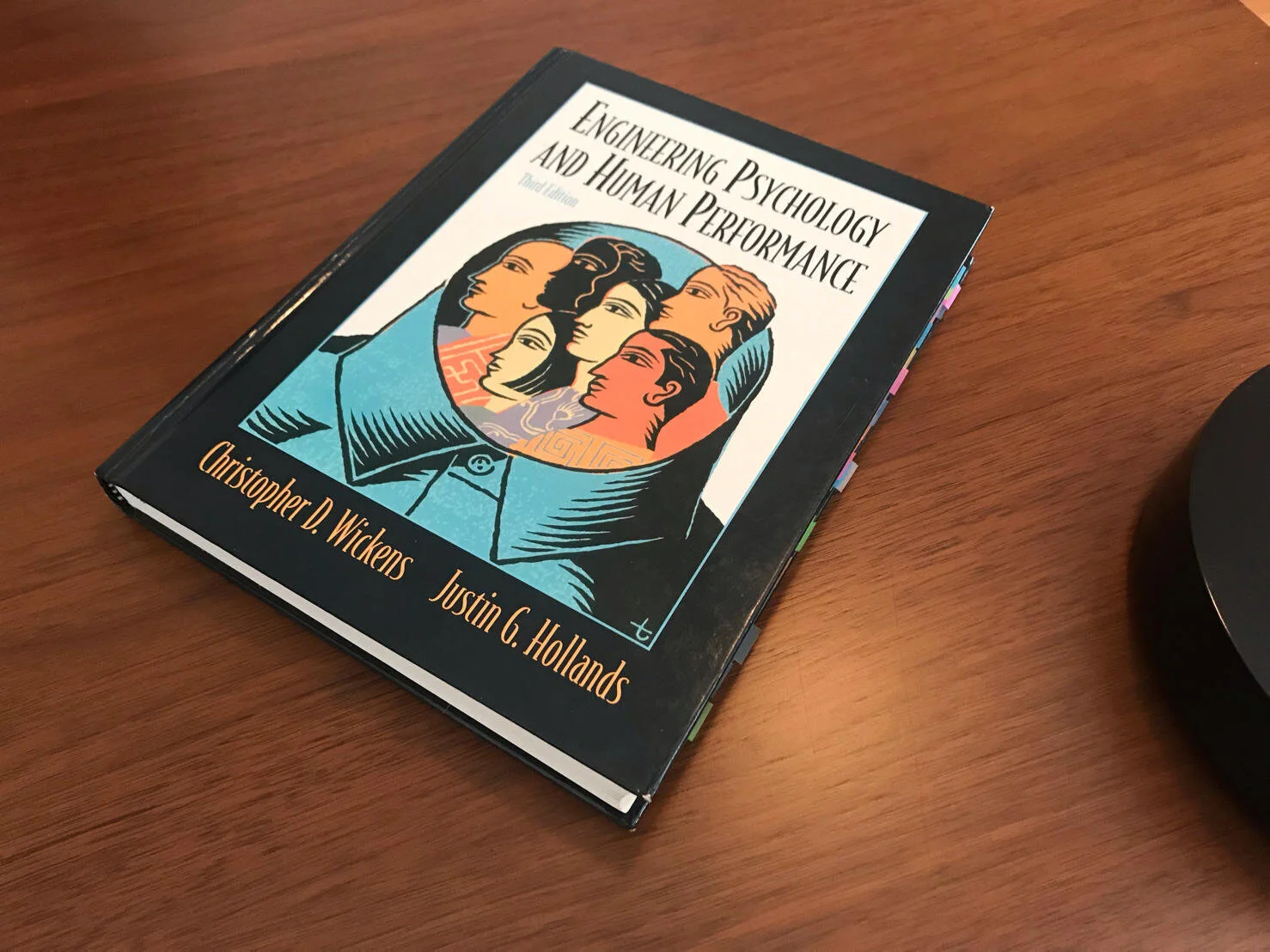
Beyond a certain threshold of knowledge you really start learning how ignorant you are. By the time I discovered this beast I’d already sat in the lead design chair on some successful experience design projects, passed assessment to join the Chartered Society of Designers as an interaction design professional, and read at least a hundred books on my field. I pretty much thought I knew what I was talking about.
This book shattered that illusion. Flicking through the contents pages and seeing chapters on signal detection theory, selective attention, working memory, decision making under uncertainty, stress and human error was exciting — I knew nothing about these things or how they might improve my practice. It also felt a bit like being kicked in the nuts. Nothing dismantles the ego quite like realizing how little you know.
As far as book recommendations go, only a 1000% committed UX / human factors nut (or pervert) is going to enjoy this. I persevered because I could see the gold in it and ultimately it became a cornerstone text for the ten principles book.
What I recommend more is the bigger lesson I learned from reading it: accept that you might not know as much as you think and keep learning. You can always improve your skills if you can stay open minded.
See this post on LinkedIn

One challenge for CX projects is deciding which scenarios and journeys to prioritize. Here are 3 factors you could weigh up.
1. What’s at stake The more important the goal, the more extreme our emotional response becomes when our progress is helped or hindered. With a bank the stakes are much higher if we’re reporting a fraud than if we’re updating our address. You could consider prioritizing these high stakes journeys.
BTW — pic shows the first of $62,377 of fraudulent transactions Chase mishandled, prompting us to switch banks. Hint Hint Chase...
2. Frequency There are often routine journeys that apply to many customers, are performed very often, or both. Taking a purely utilitarian perspective (in the sense that Jeremy Bentham would have understood it) polishing these journeys might offer the greatest benefit to the most people — another consideration.
3. Strategic importance Some customers are more profitable than others, and some journeys or interactions have a disproportionate impact on our commercial success by either: lowering adoption barriers, improving conversion / acquisition / share of wallet, lowering costs to serve, raising switching costs, etc. Another factor to consider then - which customers and journeys might impact business performance the most.
See this post on LinkedIn
The Wall Street Journal calls NPS a “Dubious management fad.” I might have to renew my subscription.
See this post on LinkedIn

One of the profound weirdnesses about how businesses attempt to improve their customer experience is how little they invest in qualitative research.
Every company I’ve worked with has some kind of quantitative capability — analytics, dashboards, etc. — yet practically none have a dedicated qual researcher on their CX staff running interviews, conducting field studies, or just observing people interacting with employees in a store.
As Steven Walden says, we’ve ended up doing customer experience without including the customer, which is pretty bloody odd, especially when you consider that experiences are fundamentally qualitative in nature.
The truth is you are far more likely to spot opportunities to innovate or improve your CX from qualitative research than quantitative, not least of all because small nuances in people’s behavior can matter a great deal.
The more specialized the domain — like designing something for wheelchair users as we did on a project a few years ago — the more important this becomes.
My advice — redress the balance. Get out of the building and spend time with real people. Observe them in action. If you can afford a mega analytics platform, you can afford a dedicated qualitative research capability. The ROI from the latter will probably be far higher.
See this post on LinkedIn

“Focusing on brand awareness first enables you to deeply understand your customers…I learned a very hard lesson at Contour. The best product doesn’t always win, the product everyone knows about does.”
So says the man who got driven out of business by GoPro — now a household name brand worth billions — that launched a similar (yet inferior) product at the same time as Contour.
And yet, I see posts all the time along these lines:
Advertising is the price you pay for an ordinary product or customer experience. You should take the money you spend on advertising and invest it in CX improvements instead. Customer experience is the most powerful form of marketing. Customer experience is your brand.
In the real world, following this delusional advice will most likely end in tears — especially if you are launching a new venture.
You can sell a lot of products and services that have an inferior customer experience if you have high awarenesss and great advertising. You can’t sell a single product with a great customer experience if nobody has heard of it. Ideally you want both...
See this post on LinkedIn

There's a saying in competitive cycling - “Races are rarely won on descents but they can be lost.” If you crash going down a mountain at 40mph you’re probably out of the race, but being a great descender isn’t enough to win Le Tour de France - you’ve got to be a great climber, time trialist and competent on fast, flat stages too.
This is the best metaphor I have for how to think about customer experience — a bad one is enough to lose, but a great one isn’t enough to win. You also have to get the other bits right - a product or service that people want; a distinctive, appealing brand, and masterful comms. Ignoring these other factors is like trying to win a cycle race on the descents.
People don’t buy products or services that don’t meet their needs just because of the CX - it doesn’t matter what the experience of flying to Timbuktu is like if I want to go to Svalbard. People gravitate towards brands that resonate with their self image and values before they’ve even had an experience or leave them if a clash in values appears. And if people don’t know you exist or forget you in the decisive moment, the experience is irrelevant.
Remember - the aim is to create the most value for the customer, not to have a great customer experience.
See this post on LinkedIn

I yowled with frustrated rage when I discovered The Writer’s Diet. I’d already written my first book, so was left dreaming about how much better it could have been had I read this first.
It’s hard to think of a skill more essential to business success than communication. Whether emails, proposals, LinkedIn posts or anything else, writing clearly and persuasively is a workplace superpower.
Few would disagree, yet the general standard of written communication at work is abysmal — ambiguous directives that can’t be followed; long-winded proposals that don’t inspire action; and white papers so tedious they could put Ambien out of business are the norm. Fortunately help is at hand.
The Writer’s Diet is an amazing book. Not only will it teach you exactly how to write effective prose, you can pile through it in 30-60 minutes. It even has a companion site www.writersdiet.com where you can discover just how terrible your writing is with a test tool.
Trust me on this - however good you think your writing is you can improve it by reading this book. If you find writing a struggle or aspire to master the written word, this is basecamp on your journey. Actually, if you ever write anything at work you owe it to yourself and your colleagues to pick this one up. Highly recommended.
See this post on LinkedIn

Nothing has more impact on our perception of an experience than our expectations. Yet expectation management is often a weakness, not a strength of most CX programs. Look at most journey maps and if they even include a swim lane for expectations (most don’t), it’s typically something wooly.
If you don’t know what customers expect how can you possibly know whether they’ll be happy, unhappy or if your changes will make a difference? You can't.
15 years ago Berry & Parasuraman proposed a helpful model. Customers, they observed, have a continuum of expectations where two boundaries are important: what they consider adequate, and what they deem ideal. Between is a Zone of Tolerance where interactions are acceptable, yet forgettable.
By contrast, interactions that are below adequate or positively deviate from our ideal expectation are more memorable, so dominate our perception of the experience.
1. If we don’t know what those expectations are, we can’t know where to focus, wasting time and money on paper improvements that have no impact.
2. Aim to have nothing below adequate, a couple of positive “memory maker” interactions and everything else in the ZoT.
3. The top of a journey map should look a bit like the (much simplified) pic.
4. Read Berry’s Book: Marketing Services👌
See this post on LinkedIn
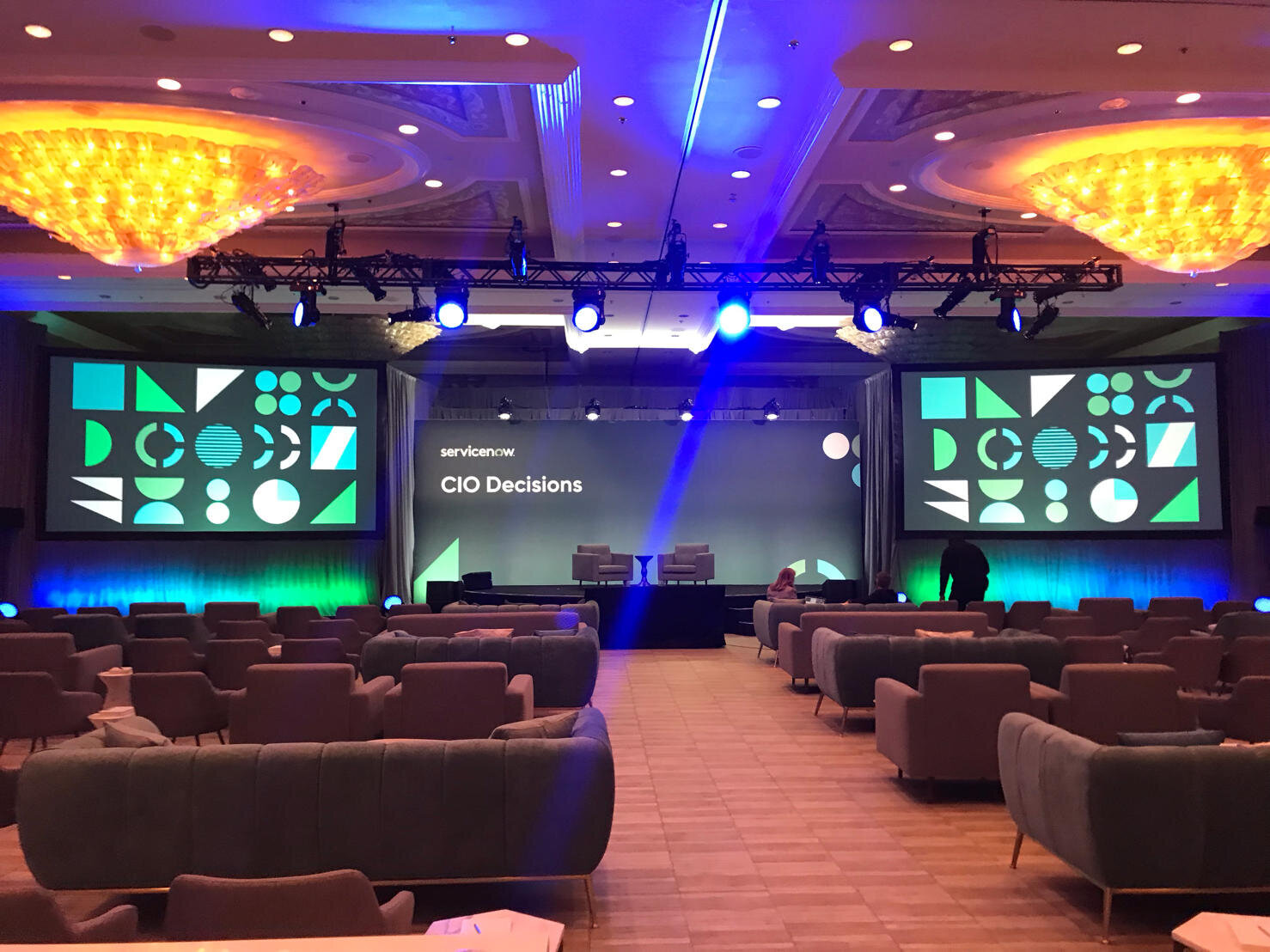
Great to be in Vegas for Service Now’s Knowledge 19 Conference. Looking forward to speaking with the CIO community about their role in shaping CX initiatives and learning from other people’s sessions and success stories. There’s a lot of great working going on out there.
See this post on LinkedIn