
These posts are duplicated from LinkedIn, where they’re seen by tens of thousands of people each week. They often spark lively, valuable debate and your voice would be welcome. Visit my profile to connect with me.
“The more that technology is perfected, the more it seems to disappear behind its purpose. At the end of the evolutionary process, the technology has disappeared. Everything is gradually tucked away until what is revealed is an object as natural as a stone polished by the sea.
The perfection of invention borders on the absence of invention. Perhaps perfection is attained not when there is nothing left to be added but when there is nothing that can be taken away.”
From my Dad’s recently completed translation of Antoine de Saint Exupéry’s “Wind, Sand and Stars” — a text written in the 1930’s yet still the most eloquent expression of excellence in design.
When your product works with such intuitive ease and consistency that it's most noticeable when absent; when it seems so inevitably right that alternatives seem willfully awkward. That’s when you can call it a job well done.
See this post on LinkedIn
What separates an exceptional UX designer or CX professional from an average one? You might think it’s creativity, empathy, qualifications, passion, etc. but actually something else is more decisive: their ability to cope with boredom.
When we start on a project things are exciting. We might be working with new people, in a new field, on a new challenge or opportunity. The daily novelty is captivating.
But as projects progress, the novelty wears off. We’re not dreaming up big creative concepts, we’re mired in detail. We’re not sharing our vision for the first time, we’re making hundreds of minor amends.
Unfortunately the last 5% of the work — the part that separates good from great — feels as hard as the first 95% because it can be excruciatingly boring. That's why it almost always gets ignored, palmed off onto others, or rushed through.
The secret to producing better work then, is to identify strategies that allow us to handle the inherent boredom that comes along with producing high quality work.
Mine include: boring myself first thing in the morning so it’s out of the way, boring myself in strict half hour intervals, and giving myself trivial rewards for completing a certain number of boring tasks.
Give em a go. Have a boring day everyone!
See this post on LinkedIn
A few days ago — in suburban Copenhagen of all places — I went to a barber to have what’s left of my hair cut.
There isn’t much raw material to work with so you'd think options to impress are somewhat limited. That said, one thing they always have to do is take my glasses off first — a seemingly insignificant interaction — but as I wrote recently, these kinds of tasks are where the opportunities lay. Case in point:
At the end of the proceedings the barber said, “One last thing!” Gave my glasses a very thorough polish, then handed them back to me with a smile.
It reminded me of another occasion, when I was having breakfast at a hotel. After seating me, the waiter quickly replaced the pristine white cloth napkin with a dark blue one to match the colour of my trousers.
In both situations, my memory of these experiences is dominated by these minor, discretionary details — the flourishes — which cost almost nothing to execute yet stand out; doing more to influence perceptions of quality and care than anything else.
If these opportunities exist when cutting a bald person’s hair or seating someone at a restaurant, they exist for every business.
Try to find and implement one simple, inexpensive flourish this year. It's a guaranteed win:win for you and your customers.
See this post on LinkedIn
If you’re involved in CX initiatives and want to prove your ROI, understanding two powerful concepts will help: The Theory of Constraints and The Point of Maximum Leverage.
Imagine we run a factory that uses 3 machines to make a widget. Two machines make 30 widgets an hour, the 3rd only makes 15. The only way to increase productivity is improving the 3rd machine because it’s the constraint. Improving the others has no impact because they’re behind the bottleneck. That’s the theory of constraints.
The same is basically true in business. If we want to grow, we need to focus on constraints — the things limiting our growth. The slight difference is that there may not be a single bottleneck — there may be many opportunities, but they all have different potential — you need to find the point of maximum leverage.
It makes no sense, for example, to improve retention if lowering adoption barriers, increasing acquisition, charging more, lowering cost to serve, etc. have greater results.
This sounds obvious, but most CX programs are based on arbitrarily improving CSAT/NPS and hoping for ROI, not systematically uncovering constraints or leverage points, then using the CX skillset to address them.
Use these concepts instead and success will follow you around like a lost puppy.
See this post on LinkedIn
Most design or CX professionals don’t really understand why customers like effortless experiences. They think it’s because we’re wired to save energy, so naturally prefer things that require fewer brain cycles, etc. This is true, but only partially. Equally important is “costly signaling.”
The amount of effort we expend in providing a service subconsciously signals our level of respect and commitment to customers — the foundations of trust and loyalty.
In the same way that your partner will have more appreciation for a birthday card you took hours to make yourself than one you bought last minute from the gas station, as customers the experiences we value most are where people expend extra effort for us.
Typically, when an experience feels effortless it's because we're either literally doing something for the customer, or we’ve invested great time and energy to craft a solution that makes their lives easier. Either way, the additional effort required on our part increases their appreciation.
In other words, customers like effortless experiences because:
1. They make their lives easier.
2. They made our lives harder.
The key point: displays of discretionary effort increase perception of value — something we can make a point of doing.
See this post on LinkedIn
There's a Japanese proverb, “Vision without action is a daydream. Action without vision is a nightmare.” What it doesn’t mention is that action with an ambiguous vision is also a nightmare.
As you progress towards building something there's less and less room for ambiguity until there's none. It's not possible to make something vaguely, which people often don't discover until they try it.
That's why hours spent clarifying the vision for a project at the beginning saves weeks of pointless meetings and re-work later. It’s not enough for one person to have a vision. You need to document the simplest set of success criteria possible, and the whole team need to get it.
An example. When Kibuo Ibe — an engineer at Casio — broke his mechanical watch, he was inspired to create a shockproof alternative.
His success criteria could not be simpler: 10, 10, 10:
The watch should have a 10 year battery life
Survive a drop of 10 meters onto concrete
Be water resistant to 10 bar (100m)
They tested the concrete drop very scientifically — by throwing prototypes out of a 3rd floor bathroom window at the office.
2 years ago Casio sold their 100,000,000th G-shock. Good things come from clear, simple briefs. Drive ambiguity out early, and reap the benefits!
See this post on LinkedIn
Most journey maps are severely limited in their ability to help us improve customer experiences, because they focus on identifying and communicating the stages of the journey. Why is this a problem?
Because a journey stage is just an arbitrary group of interactions that the customer must perform. It’s at the next layer down — the interaction level — where all the complexity, friction, opportunity and risk is found.
Obviously, if every interaction is perfect, every journey is perfect. But almost nobody models experiences down to the level of these discrete interactions, rendering the whole exercise pretty pointless.
An example. We once analyzed the mortgage application process for a bank, who thought the journey only consisted of a handful of stages, so wasn't that bad. They were shocked when I showed them a spreadsheet of the 190 tasks customers needed to perform — pressing buttons, selecting new fields, entering data, reading blurbs, etc. — many of which could easily be eliminated.
Inattention to detail does a lot to explain why most experiences are so poor. The great news is if you can dig a little deeper you'll strike gold. By getting down to the task layer, you'll be able to craft a customer experience that makes rivals seem amateurish.
See this post on LinkedIn
There's a gaping chasm between the environment we learn in as adolescents and the one we operate in as adults. This can cause problems in later life — especially for start-up founders and would-be innovators — because the mental and cultural modalities encouraged in school are an impediment to entrepreneurship in many, many ways.
One problem in particular is the “Grade A student” mentality — a problem I suffered with until my mentors beat it out of me.
At school we're often led to believe we can excel (or be similarly capable) at everything. Later, if we decide to start our own venture, this belief can sub-consciously lead us to try doing everything ourselves.
In business though, specialisms are deeper, and gaps between knowledge (from learning) and wisdom (from doing) are wider. Trying to do everything — marketing, product development, accounting, whatever — will bring your strengths into parity with your weaknesses, not vice versa.
Instead, to succeed, we must outsource our weaknesses to others for whom they're strengths, and capitalize on our unique abilities.
As Guitarist Steve Vai put it: “I don't work on my weaknesses, I ignore them, and I cultivate my strengths.” As someone who learned this lesson the hard way, I cannot over- emphasize how important this is.
See this post on LinkedIn
If you are involved in designing products, services or experiences the easiest way to get better, quicker is to sharpen your critical thinking. This is remarkably simple in practice because it just involves asking yourself one of two questions:
If you think something is good, what makes it good?
If you think something is bad, what makes it bad?
If you can get into the habit of thinking this way when you interact with products and services or when having an experience as a customer, every day becomes a learning experience and patterns will start to emerge.
When patterns emerge they often reveal principles. Once the principles are clear you can systematically apply them, making your practice more efficient — achieving successful outcomes more consistently with fewer iterations and less risk.
See this post on LinkedIn
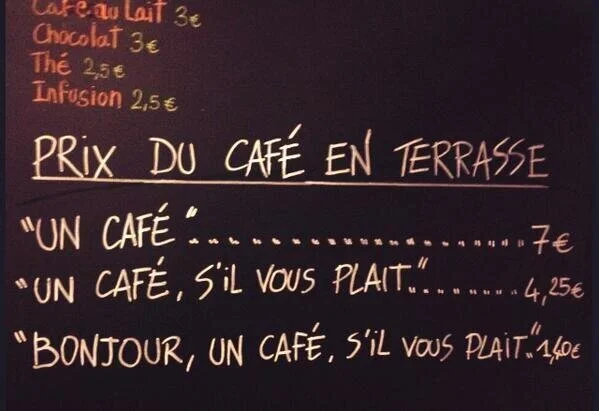
Every customer experience involves both a business and a customer. Obvious I know, but we spend almost 100% of our time talking about how we can create better experiences for our customers, while barely acknowledging that being a good customer is also a skill worth developing.
With a little effort on our part we can have better experiences more of the time and at lower prices, avoid the risk of high blood pressure, and enjoy a sense of smug satisfaction that we’re the exception to the rules.
The secret — having observed many charismatic people in action — is to forget you're a customer altogether and treat everyone as if they're a close friend, trustworthy confidant or willing accomplice, not a hapless minion there to do your bidding.
Here are some simple examples of things you can easily do to transform your experience as a customer:
Be polite.
Get to know people by name.
Be grateful.
Pay it forward — most people like to reciprocate.
Appeal to people’s better nature.
Co-conspire.
Countless free upgrades to flights, hotel rooms, hire cars, refunds that are against company policy, jumping queues, and exceptional priority service all point to one conclusion - if you really want a great customer experience, try being a great customer first.
See this post on LinkedIn

Great customer experiences are more likely with small businesses than large ones. The family owned Anderson Inn in Morro Bay, for example, makes most hotel chains look like they’re run by lobotomized amateurs. Why is this? Three things come to mind:
1 Psychological proximity
The voice of the customer is literally the voice of the customer. They interact with customers so frequently and closely that they can more easily tune in to their wants and needs. Customer relationships are often personal and long term - a different dynamic entirely.
2 Autonomy
The small business owner is making up the rules as they go. They’re free to do what feels right in the situation without being mired in procedural gloop.
3 Skin in the game
If their business fails, they fail personally. They can’t afford to have unhappy customers. As the owner they often take personal pride in their work.
Creating a great CX is often intuitive when these 3 conditions are present. The challenge is that they evaporate with scale and require a degree of inefficiency. Maintaining them as you grow requires conscious, tenacious effort.
See this post on LinkedIn
I humbly present Watkinson's first law of innovation:
Any firm's ability to change is inversely proportional to the length of time it takes to get a new supplier from proposal to purchase order plus the length of payment terms.
ability to change = 1/(time to get started + time to get paid)
This idiotic but remarkably accurate predictor works for several reasons:
Taking forever to execute basic processes is generally a sign that there is horrendous red-tape, legacy systems, clumsy manual processes, bureaucracy or a general lack of urgency about the place. If these exist in one place in the business, they tend to exist everywhere which makes change difficult.
Second, if it takes forever to get paid you can tell that the finance function of the business have abandoned innovation as a means to growth and have settled into tweaking cashflow, bullying suppliers and needle-dicking with ROI calculations rather than taking risks that could bring substantial rewards. If we take payment terms as a proxy for a company's sense of their own bargaining power, excessively long terms are often a sign of arrogance - another barrier to change.
If it takes a year to raise a PO and they insist on 90 days terms, you're doomed! 😝
See this post on LinkedIn
🚨If you're at a startup, work in marketing or CX please read🚨
Most people are so focused on the benefits of their product/service, they forget about the barriers that can stop people from ever adopting it. However good the product, branding or advertising, with high barriers you'll suffer.
CX'ers that aren't systematically dismantling these barriers are also missing a huuuge trick.
Rate each as red/amber/green/ then get to work.
Operational
Installation - Can they get set up easily?
Compatibility - Does it work with what they've already got?
Competing Technologies - Are you built on the right tech?
Functional risk - Does it actually work as promised?
Distribution - Is the product physically available?
Network Effects - Does it rely on mass adoption to be useful?
Financial
Up front cost - Is the price point accessible to the target customer?
Switching costs - Is it expensive to change providers?
Financial risk - Is the level of security, warranties, etc. reassuring?
Experiential
Trialability - Can they experience the value before committing?
Training / expertise - Is it suitable for their level of competence?
Strong fallback options - Are familiar alternatives within easy reach?
Learned behaviors - Do interactions clash with existing mental models?
Good luck!
See this post on LinkedIn




A standard claim in the CX propagandist’s arsenal is that loyal customers are more profitable. The Blurb Problem may cause you to question that.
I am a keen (obsessive) photographer and print a lot of photobooks. People who see them often ask where I get them made. “Blurb.” I say. “They’re amazing.”
I'm a 10/10 Promoter.
However… I've been buying from Blurb long enough to know that they routinely offer discounts. One week 25% off. Another 30% then 35% and then the jackpot - 40%. This has resulted in two consequences for Blurb:
1. They've trained me to buy in bulk at massive discounts when the 40% offer comes round
2. When I recommend the service, I also let my friends in on the secret
The outcome - A stunningly loyal customer who is probably worthless financially, creating even more loyal, worthless customers.
Two lessons:
1. Don’t just assume that loyal customers are more profitable or that increasing loyalty will grow your bottom line - it depends how you do it!
2. Don’t train your buyers to expect discounts - it can irreparably devalue your offering and make it very hard to get them to pay full price again.
Pics here if you're interested!
See this post on LinkedIn
For all the bazillions of pounds being spent on CX initiatives, UK customers are getting steadily unhappier. If you've read The Leader's Guide to Customer Experience you'll probably know why. If you haven't now might be a good time to take a peek.
See this post on LinkedIn
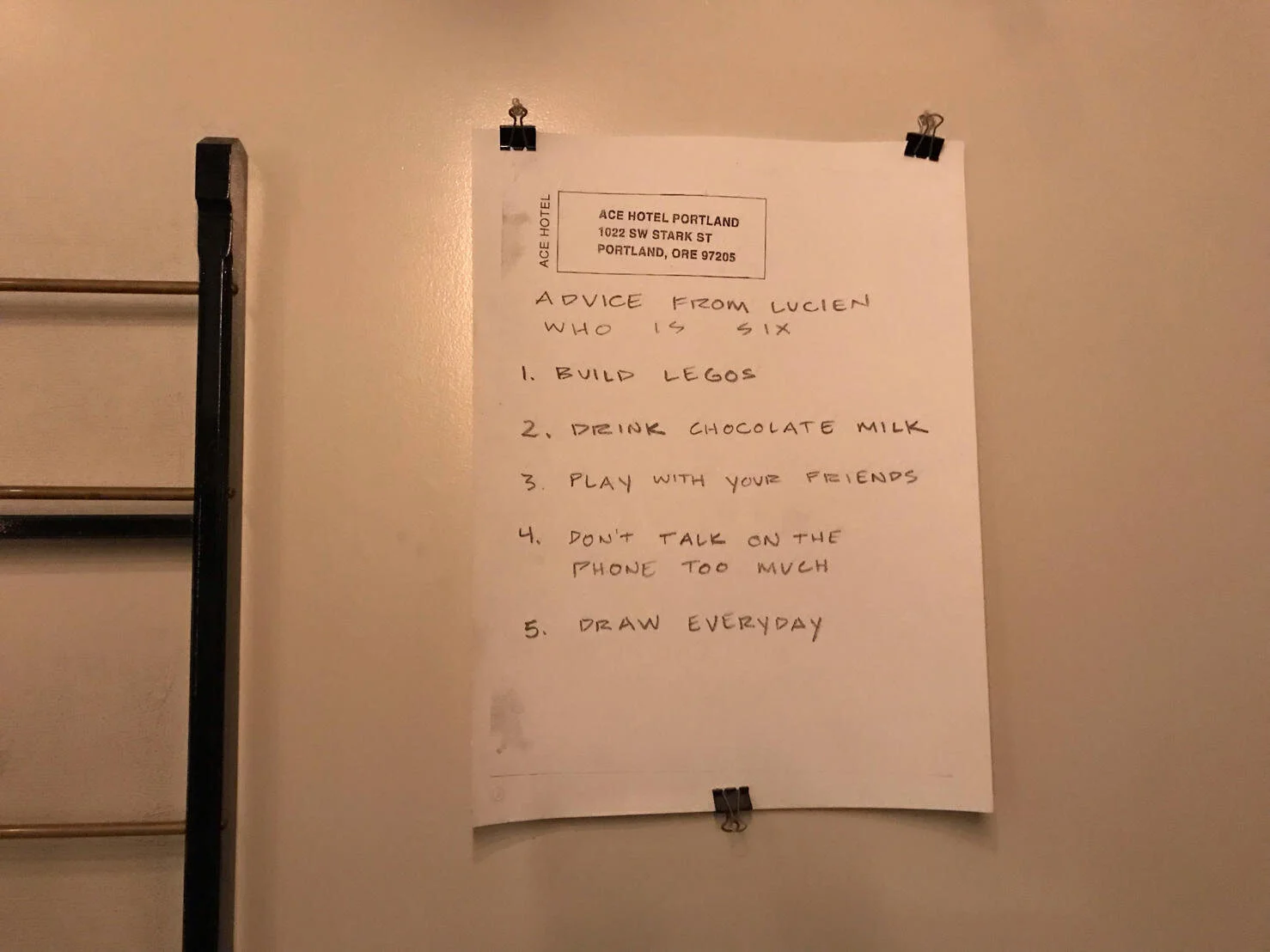

Why are some people and organizations able to reinvent themselves, adapt and change, which others fade into irrelevance?
How can I be more adaptable, less fearful of change, and live a more truthful, meaningful life?
Big questions that I’m certainly not alone in asking, and I found both comfort and guidance in this week’s obscure recommended reading — John Gardner's slim and eminently readable, “Self-Renewal: The Individual and the Innovative Society”
The prose is concise, well considered and amazingly quotable. Consider these beautiful pearls:
“By middle life most of us are accomplished fugitives from ourselves.”
“While the modern world has produced grounds for complaint, it has also produced the person doing the complaining.”
“The truly creative person is not an outlaw, but a lawmaker.”
“The moving waters are full of life and health; only in the still waters is stagnation and death.”
“Lives based on having are less free than lives based either or doing or on being.”
“We pay a heavy price for our fear of failure. It is a powerful obstacle to growth. It assures the progressive narrowing of the personality and prevents exploration and experimentation.”
Five out of five.
See this post on LinkedIn

One of the worst pieces of advice I often see is that businesses should “create a new category”. If you take this advice literally you’ll almost certainly fail, like Renault did with the Avantime Minivan Coupe (which I personally think is very cool but still).
A category is a class of product or service that customers understand. Choosing a clear category is important for two reasons: first it reflects how customers think; second it gives you boundaries that make competitive analysis and positioning amongst those alternatives possible.
Customers buy from established categories because it makes life easier. When a product is in a clear category – running shoes, office chairs, whatever – we understand what the product is for, and usually have a basic idea how to choose between options. When products fall outside an obvious category, it's easier to simply reject them – we can’t be bothered to figure them out.
When products are extremely innovative or don’t really belong in an existing category, you must still try to market them in familiar terms. The iPhone was marketed as a phone, for example, not as a hand-held nano-computer. Tesla have historically marketed their vehicles as cars with zero emissions, not as semi-autonomous EVs.
Follow their example!
See this post on LinkedIn

Patagonia’s free clothing repair service is a CX masterclass that neatly combines many of the themes I’ve been prattling on about recently. Here’s how it works:
1. You go to a store with your damaged garment.
2. A well trained, friendly (and enthusiastic) staff member fills out a simple form with your details.
3. They set clear expectations about how long the repair could take (and why).
4. Your garment comes back looking like new (earlier than expected in my case).
5. There is a card with it thanking you for repairing it.
Underlying principles:
CX should build the brand — The service and experience reinforces Patagonia’s environmentally-friendly ethos.
Reflect the customer’s identity — The service aligns with the target customer’s values, also giving them a feel good factor for doing their bit.
Effortlessness — From placing the order to home delivery, it’s a breeze.
Social pleasure — The interaction with the staff is fantastic.
Expectation management — Setting a timeline they know they can deliver on.
Attention to detail — The repair and experience are exemplary.
End on a high — The thank you note!
Emerson once said, “Those who know how will always have a job. Those who know why will always be their boss.”
Master the basic principles and you can't go wrong.
See this post on LinkedIn

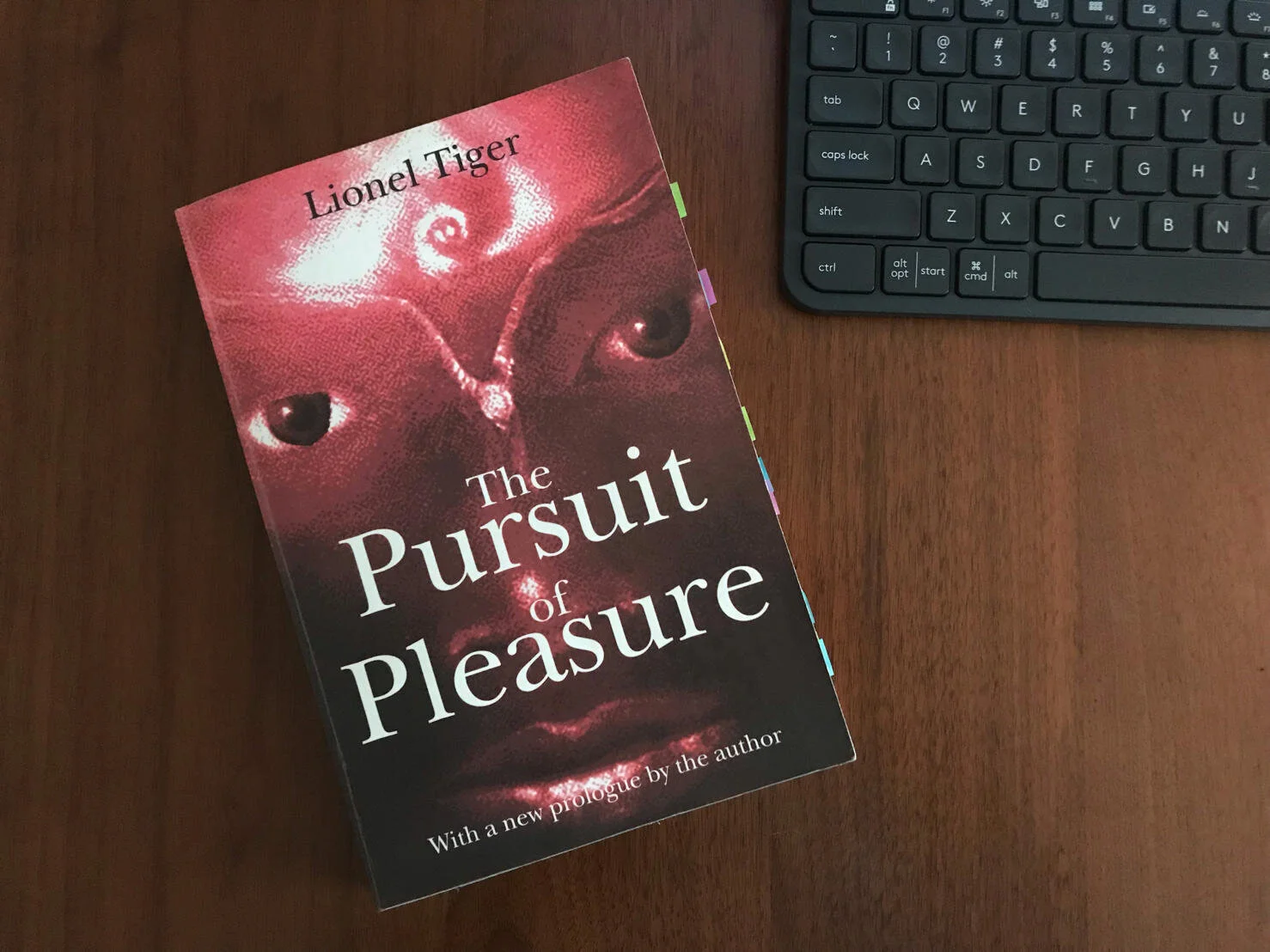
This week’s obscure recommended reading — The Pursuit of Pleasure, by Dr. Lionel Tiger. Why this book? If you’re involved in creating experiences for others or just curious about your own behaviour, the more you know about pleasure the better.
Dr. Tiger explains that pleasure is part of our evolutionary heritage, encouraging behaviors that ensure our survival. He also points out that wherever there is pleasure, there are elaborate rituals, laws and regulations in place. In effect, controlling their pleasures is a way to control a person.
He describes four types of pleasure (which can be consciously considered when designing experiences):
Physio — anything sensory
Socio — anything that involves interacting with others.
Psycho — derived from accomplishing task
Ideo — relating to abstract experiences (watching movies, solving challenging problems)
Eccentric, intellectually engaging, not to mention hilarious in parts, Dr. Tiger explores the topic of pleasure from every angle: the moral, psychological, anthropological and even political.
It’s also the only book I’ve read which opens with a story of how the author first masturbated in an empty bath tub — “An act of theft from a gloomy culture that embargoed pleasure.”
Highly recommended. (The book that is.)
See this post on LinkedIn