
These posts are duplicated from LinkedIn, where they’re seen by tens of thousands of people each week. They often spark lively, valuable debate and your voice would be welcome. Visit my profile to connect with me.
Let’s talk about the long, sloooooooow drift that screws every big company eventually.
When we start a business we have to find product-market fit or we fail. We cannot succeed without creating something people want that's competitive with alternatives.
But over time, as we grow, we develop infrastructure: technological, operational, and social. We also accumulate resources: a bigger balance sheet, a recognized brand, and a customer base who is mostly satisfied, and probably quite inert.
Now the creep begins. Decisions are no longer taken based on what the market demands of us — we're insulated from the harshness of the environment, so we start to do what’s easiest for us.
“We can’t add that feature because our tech doesn’t support it.”
“Yeah, that’s too politically sensitive to discuss.”
“We know this won’t fly with customers, but we’ve committed to the program.”
The goal is no longer product:market fit. It’s product:organization fit. And now it’s just a matter of time before disaster strikes.
This means a primary leadership task in any growing or sizable company is as simple as it is difficult: to stop the drift by any means necessary, or reverse it if it’s set in. It needs to be ruthlessly expunged because it spreads so damn fast.
Asking a simple question can help: Are we doing this because it’s easiest for us or because it creates the most value for our customers?
They aren’t mutually exclusive of course, but if you keep putting yourself first, eventually you’ll find yourself last.
See this post on LinkedIn
The language of business is where words go to die.
Innovation, disruption, customer-centric, transformation, frictionless, strategic…these words — and countless others — have no impact on us at all because everyone uses them, all the time, to mean whatever they want.
So if you want people to listen to you, remember what you said, or better yet actually do something, avoid these worn out tropes like the plague. Refuse to use them.
Instead, say what you mean in the most basic possible terms. Better yet, use analogy, metaphor and colorful, emotive language to paint a more vivid picture.
Sure, you could say, “Technocorp presents a disruptive threat to our core business.” But this sort of language is hardly going to inspire action. “Technocorp’s tank is on our front lawn, and we’re staring down the barrel of the gun,” will get people moving.
Yes, you could say, “We’re working on a frictionless customer-focused solution.” But say, “We know what customers want and we’re giving it to them: something so fast it makes every competitor look bovine.” And people will get excited.
Communication is an essential business skill. Words are powerful instruments to inform, persuade, motivate and inspire. Use them accordingly!
See this post on LinkedIn
If you’ve got a list of brand values and there is no evidence that your organization subscribes to them, no incentives for people to live up to them, or no initiatives that demonstrate a tangible commitment to them, here’s what they achieve:
Cynicism and eye-rolling among employees.
A cultural acceptance that it’s ok to talk the talk and not walk the walk.
A perception among the workforce that the leadership is full of hot air.
Customers realizing you’re just another disingenuous brand.
It’s better to have no defined set of brand values at all than broadcast to the world that you're full of shit.
See this post on LinkedIn
Most of the time:
If you find a strategy confusing, it’s overly complicated.
If you don’t understand a document, it is poorly written.
If you can’t grasp a concept, it is badly explained.
If you can’t use a product easily, it is shoddily designed.
If you don’t know what to expect from a service, it is inadequately communicated.
If you can’t navigate a range of offerings, it’s not been put together properly.
Trust your abilities. If you don’t understand something it’s probably not you, and you’re probably not alone.
Don’t worry about looking stupid or whether you're not smart enough to "get it". Worry about what happens if nobody speaks up about sub-standard work, unintelligible plans, or decisions that will ultimately make customer's lives more difficult or cause products to fail outright.
See this post on LinkedIn
Ten simple ways to improve most documents:
1. Use a self-explanatory title, subtitle and file name
2. Write the estimated reading time on the cover
3. Include the author’s role and contact details
4. Group the contents into a logical, flowing structure (best worked out in advance)
5. Open by explaining the document’s purpose and background
6. Use simple, direct language
7. Remove all acronyms (readers are not always company or industry insiders)
8. Make it as concise as possible
9. Proofread it
10. End with a clear conclusion, call to action or next step
Award a point for each. Score the next document you read. Weep at the result…
See this post on LinkedIn

My profile pic is five years old so I wanted to update it with something that has a modern, laid-back feel and shows that I'm a really approachable, down-to-earth sort of guy.
I think we can all agree my comrade Daniel Furtado has really nailed the brief here.
See this post on LinkedIn
Entrepreneurs, start up founders and leaders are often told that the key to winning big is to “create a new category”. This is terrible advice. Why?
Customers rely on familiar categories to as shortcuts to finding products that match their needs. Most of us tend to think in categories first then consider specific brands or products:
"I want a whisky" > Macallan > 18 year.
"I need a new car" > Tesla > Model 3.
"I’d like a frying pan" > Le Cruset > something orange and heavy.
Unlike existing categories that consumers understand — whisky, car and frying pan — if you deliberately invent a new category you make your product hard if not impossible to buy because people are not looking for it and are deprived of the reference points they use to steer them towards a good purchase.
This is why game changing innovations are typically marketed in familiar terms. The iPhone is called the iPhone after all. And Tesla have marketed themselves as cars with zero emissions, not electric cars until very recently.
So where does the idea that we should create new categories come from in the first place? It’s a case of mistaking an emergent outcome with deliberate strategy.
Clearly products do spawn new categories: smart phones, EV’s, etc. But these terms are almost always coined by consumers or the media after these products successfully distinguish themselves as superior or innovative offerings within an existing category, rather than by the brands themselves as part of a marketing or product strategy.
In other words the formation of new categories is usually the result of consumer behaviour, not the contrivance of a would-be category creator, and confusing the two is a mistake that typically ends in disaster.
See this post on LinkedIn

Bike EXIF is by far the most popular and influential custom motorcycle website in the world, and has 3m+ followers on social media. They receive dozens of submissions a day and are extremely discerning on what bikes get coverage and recognition on their platforms. So understandably I’m delighted that my first custom build has been featured on their site this week.
Dreams can come true! Happy face.
Their write up on the bike is in the comments :)
See this post on LinkedIn
Let’s call them school A and school B.
School A thinks:
Business is an intellectual contest
Opportunities are in the market and our job is to discover them
Exhaustive analysis is the key to success
Risk of failure is bad and should be minimized
Projects should be approved based on their forecast ROI
School B thinks:
Business is a pragmatic discipline
Opportunities are created through what and who we know
Real-world experimentation and iteration are the key to success
The odds of failure don’t matter as much as the potential payoff for succeeding
Projects should be trialed based on affordable loss
I’ve yet to meet a successful entrepreneur who didn’t subscribe to school B, and I’ve yet to meet any school A types who have created a game-changing new product or service.
Different beliefs, different behaviours, different results.
See this post on LinkedIn
Two more excellent people to follow:
Keenan. If you have not read his book Gap Selling, you can thank me in advance.
Elina Halonen. First class content on all things behavioral economics and consumer insight.
See this post on LinkedIn
Big companies love things that look clever: detailed analyses, intricate strategies and plans, complex market positioning models and data visualizations. But this kind of cleverness is the problem, not the solution.
These things typically:
Take a lot of time and money to produce.
Are difficult to understand and act upon.
Obscure the essence of the underlying challenge, opportunity or objective.
Distract people from actually improving things in the real world.
And — worst of all — can easily delude us into an unhealthy level of confidence in our plans.
In other words the cleverer you try to be, the less you do, the longer it takes, and the higher the risk of failure.
Keep it simple, whatever it is. More people will understand what needs to be done, and there's a greater chance of them actually doing it.
See this post on LinkedIn

After eighteen months my dream of building a custom bike has come to fruition, and here's the result.
It’s been a steep learning curve — starting with an Ikea tool kit and no experience — and there were no shortage of setbacks along the way. But as well as ending up with a bike I like, I also found creative fulfillment, a supportive community, and solace during a difficult time. It's been a great experience all round in other words.
I learned a couple of big lessons from this project:
1. If you have a particular goal or ambition just identify the first step and get started. The next step will then present itself, then the next, and you will start to build momentum. Don’t waste too much time planning, strategizing or analyzing, you risk thinking yourself into a hole and never begin. Just get on with it. The first step is usually quite easy. In my case ordering the service manual and a set of wrenches — not difficult!
2. There is great value in counterpoint projects. If work is fast paced, having something where you can take your time is cathartic. If your work is all in your head, having something tangible or tactile to enjoy provides some balance. And if you’re often beholden to other people — clients, bosses, or other stakeholders — having something that’s just for you and you have total control feels wonderful and freeing.
My second build is already underway :)
Will put a couple more pics in the comments.
See this post on LinkedIn
Two more people worth following this week, as promised:
Sharon Hurley Hall (she-her) is an anti-racism activist, and I have learned a lot from reading her eye opening posts about racism, inequality, diversity and inclusion. We have a long way to go in tackling this societal malaise, and it is only by listening to voices like Sharon's that I have begun to learn the true nature, scale and scope of the problem and what we should all be doing about it. Highly recommended.
Everard Hunder is a seasoned CMO who shares thought-provoking observations and practical advice based on years of experience getting business results in the real world. He's a pragmatist through and through and heaven knows we need more of those on Linkedin. You will not be disappointed.
Happy Friday everyone.
See this post on LinkedIn
It's reasonable to assume that most people are more comfortable following than leading, responding rather than initiating, or going second rather than going first. They worry about being rejected, or venturing into the unknown.
But if we don’t buy a ticket we can’t win the lottery. If we don’t shoot we can’t score. If we don’t ask, the answer is no by default. And if we don't try we've failed already.
With this in mind, a simple way that many people can create more opportunities for themselves is just to get comfortable going first, rather than waiting around hoping someone else will seize the initiative.
Remember, the only possible downside to asking for something is hearing “no”, which is exactly the same outcome as not asking. The potential upside of taking a first step, however, is unlimited.
I shudder to think of all the amazing friendships, client relationships and opportunities that would have passed me by if I hadn't been willing to initiate things. I'm pretty glad I suggested getting together for coffee with Csaba Konkoly after we met at a party, for example. We wouldn't have ended up writing our book together otherwise. It's as simple as that.
Be willing to go first. It’s a small difference that makes a huge difference.
See this post on LinkedIn
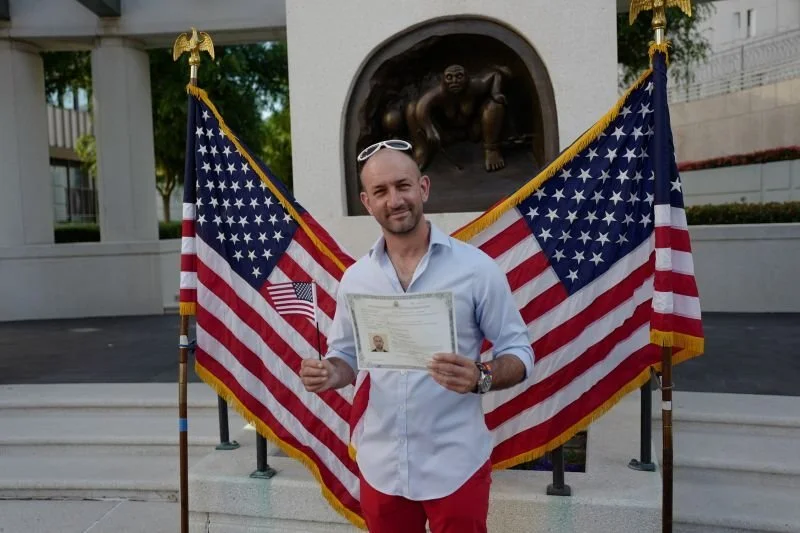
Thank you to everyone who wished me a happy birthday! I had a wonderful day which happened to coincide with my naturalization ceremony to become a US citizen.
Fortunately I opened a couple of presents beforehand which included these splendid and wholly appropriate red trousers. Sometimes everything just works out beautifully.
Have a great week!
See this post on LinkedIn
Influencer lists are bullshit and most LinkedIn content ain't great, so how do you know who to follow? Help is at hand.
I'm going to recommend two people a week from now on, whose posts I find most valuable and insightful, starting with:
Robert van Ossenbruggen who writes engaging, clear-headed content about data, biases, and marketing effectiveness.
And if you're not already familiar with Liz Fosslien's illustrations illuminating the gap between our perceptions and reality, they are guaranteed to brighten up your feed.
Cheers!
Matt
See this post on LinkedIn

When I was a freelancer I would sometimes reflect on my experience with clients and think. “If I ever ran a business I would never do that.” And there was one recurring theme: late payment.
Parking for a second that it’s rude, horrendously disrespectful and typically a breach of contract, how can we expect to get the best from someone if they are distracted from their work by trying to get paid? How can we expect them to go the extra mile for us if we can’t even be bothered to pay them on time? It is so stupid and self defeating.
So when we formed Methodical, Ben and I decided to do things differently. We’d pay people as soon as we could as a gesture of goodwill and gratitude, and to give our hard-working associates one less thing to worry about.
Guess what? They’ve repaid us a thousand times over with their great work, saying nice things about us, and by sticking with us when others are trying to lure their talent away. We also have a queue of amazing people who want to work with us that would be the envy of any consulting or agency business.
Total no brainer.
See this post on LinkedIn
I’ve been included in the Global Guru’s list of “The World’s Top 30 Customer Experience Professionals” for 2022. Some commentary:
1. While it’s nice to be recognized for my contributions to the field I find the whole idea of gurudom faintly ridiculous. Every idea, book, or presentation I’ve done has been the result of teamwork, not individual expertise. I consider myself a student, mentee and open-minded collaborator with a lot to learn, not a wizened guru.
2. Appearing on these lists has much more to do with mouth radius than anything else. Inclusion tends to reflect how much energy people devote to self-promotion and social media not the calibre of insight or expertise per se so they should be taken with a heap of salt. I personally believe that the people we can learn the most from are the leaders and managers within organizations who are actually changing things for the better in challenging environments. But those people tend to have their heads down getting on with the work so are less visible and harder to access.
3. More important than either of the above: nobody seems to be mentioning that of the 30 global gurus 23 (77%) are men, and the vast majority of those are middle-aged white guys (about two thirds of the total list). Anyone who is plugged into this industry knows that this is totally non-representative of the real world distribution of expertise and influence and I find it wholly objectionable.
TL;DR — thanks but no thanks. Back to work.
See this post on LinkedIn
Many people associate productivity with “getting more done”. But this doesn’t make sense for a simple reason: the amount of things we could do is unlimited, so getting more done just leads to trying to get even more done and constantly feeling like there is yet more to do.
Instead, becoming more productive is a three-fold path:
1. Decide what is important and don’t get distracted.
Decline or delegate the rest if you can — even if many of those things sound like fun. You’ll do a substandard job on everything if you spread yourself too thin and end up exhausted.
2. Work out a routine and rhythm that suits your disposition.
Everyone has a particular manner of working that suits the grain of their brain, and going with it makes everything easier. I work best in the early morning, in two hour chunks with half hour breaks (ideally with a walk) in between, so I try to schedule my day accordingly.
3. Establish a cadence or work rate that is sustainable.
I know that I can only concentrate hard for 4-5 hours a day (with breaks) so I don’t try to exceed that. Some people might be able to do more, others less, it doesn't matter. The key is to discover and stick to a pace that you can continue indefinitely. Anything worth doing is likely to be a long term commitment — attempting to sprint a marathon is a bad idea!
See this post on LinkedIn