
These posts are duplicated from LinkedIn, where they’re seen by tens of thousands of people each week. They often spark lively, valuable debate and your voice would be welcome. Visit my profile to connect with me.
You can’t have it both ways: you either want to innovate, or you want a forecastable return on investment.
The only way you can hope to forecast returns — if it’s ever possible — is if all the parameters are known and easily measurable: cutting production cost by 2% for example.
In these situations you can put a spreadsheet together and can work out the likely payoff with a degree of accuracy, at least in theory.
But when you actually innovate — create a new product, try a bold idea, or approach something in an entirely different way — it’s impossible to know what the payoff will be. It could fail, it could be transformative, it could be somewhere in between. Nobody knows.
There are two implications.
First, if you only sign off projects with an obvious return on investment you’ll be limited to a world of incremental improvements whose outcomes are easy to quantify, but whose impact is severely limited. In the long run you’ll be left for dead by competitors who are willing to think bigger.
Second, if you want to innovate, the financial rationale to use is affordable loss, not return on investment — working out an amount you can safely spend to see if an idea works. An approach which, ironically, exposes you to much less financial risk than fantasy ROI spreadsheets that have been fudged to make the numbers work.
See this post on LinkedIn
Being able to explain success after it has happened isn’t the same as creating a prescription for success in the future.
It’s easy to point out that someone sailed off into a “blue ocean” once they've succeeded, for example, but it’s almost impossible to execute such a strategy deliberately, which is why you can’t find many — if any! — case studies of people intentionally pulling off such a manoeuvre.
Sure, we can pontificate about the “job to be done” by a milkshake, per Clayton Christensen's famous example. But the milkshake had been selling in abundance for years before this existential question was asked. It would be harder to apply such a technique if the milkshake didn't exist yet.
According to a report by Boston Consulting Group, Honda’s success selling small motorcycles in America conformed perfectly to their clever theories. According to Honda though, this was nonsense. In reality, they tried selling big motorcycles and failed, but people seemed to like the little scooters their employees were using, so they tried selling them instead.
The implications are clear. When presented with a management theory or clever sounding strategy, don’t look for whether it convincingly explains past successes, look for examples of people who have deliberately applied it and succeeded as a result. The two are not the same, and you may be surprised at how hard it is to successfully apply these theories and strategies in your own situation.
See this post on LinkedIn
Sergey and Larry tried to sell Google for a couple of million bucks so they could stay in school. Nobody bought it.
Execs at Nike thought the Air Max was a terrible idea.
Internally, people thought Gmail was a joke and a distraction from their core business.
Steve Jobs didn’t want to have an App Store.
The U.S. Navy wouldn’t fund radar because they didn’t see the point.
Steve Ballmer thought the iPhone was so ridiculous he laughed at it in an interview.
Martin Goodman at Marvel thought Spiderman was a crap idea.
Xerox invented ethernet, the GUI and interpress but took none of them to market.
None of these people or organizations are stupid, obviously. In fact far from it.
It’s just that in reality almost every bold start up or product idea is deemed idiotic until it isn’t, what makes a new product or innovation a hit is usually only obvious in retrospect, and we cannot analyse or strategize our way to success because we cannot predict the future.
That’s why — contrary to what academics, keyboard warriors and intellectuals will tell you — when it comes to new product development or genuine innovation the approach that works best in the real world is simply to experiment: try ideas out and see if they work. It’s the only way to know for sure.
See this post on LinkedIn
If you want to write a successful — perhaps even best-selling — business book, here’s something you may find surprising:
Writing the book itself is about 20% of the work, possibly less. In reality there are seven phases.
1. Building your platform.
Publishers don’t publish books from authors who don’t have anyone to sell to. Readers don’t buy books they don’t know exist. Building your platform is a long-term activity that should start years in advance ideally. I should know, I messed this up big-time early on.
2. Developing the big idea.
What new insight do you have to give, and why should people learn it from you? What makes it worthy of being a book vs a blog post, tweet, or white paper? Without a big, important idea you’re going nowhere. This can take a loooong time to crystalize.
3. Background research.
To be a trusted, credible expert you need supporting evidence. This could be primary or secondary research but it pays to be thorough, and this takes a lot of effort.
4. Proposal writing and deal making.
The point of the proposal is to express the book in miniature. This helps you get clarity on the structure, readership and overall shape of the book which saves months of effort down the line. It is also essential to securing an agent and publisher. The proposal for the grid took me over a year and over ten iterations - time consuming!
5. Writing the book.
Line by line, chapter by chapter until it’s done. This will be much easier than you think having done 2,3 and 4.
6. Editing and production.
This is a huge task and hugely draining because you’re tired by this point, but a professional editing team is worth their weight in gold and have transformed all three of my books. This typically takes as long as writing the thing in the first place.
7. Promotion and marketing.
Woo hoo! We’ve got a book, now the work begins. Without effective marketing and promotion the book will not get critical mass and might die on the vine. This requires extensive up front planning. Again, I know, because I’ve bungled it in the past.
Hope this helps any aspiring authors! It’s a lot of work but it’s totally worth it
See this post on LinkedIn
Opinions of Elon Musk and Sam Bankman-Fried are textbook examples of the halo and horn effect in action — two of the most prevalent biases in the business world.
In brief, the halo effect causes us to infer positive specifics from generalities. If somebody is tall and handsome, for example, we tend to assume they are also smart without any supporting evidence. The horn effect is the opposite. We might assume, for example, that because somebody speaks with an unfamiliar accent that they are stupid, or if they are overweight they are lazy, again without any supporting evidence.
In business the halo effect cause us to praise everything about a leader when their company is going well. The horn effect means we then criticize everything about them — from their leadership style and strategy to their mental health — if the business falters or stock price drops. Confident visionaries become arrogant imbeciles overnight. Courageous entrepreneurs are suddenly reckless risk-takers. The only thing that has changed is swapping one bias for another when the performance changes.
In reality, however, the halos we bestow on people when they’re succeeding are never justified in the first place but neither is the lacerating criticism these same people get if they struggle or fail.
A more realistic assessment would be far more even handed. We all have very real strengths and weaknesses. Sometimes we win, sometimes we mess up. Sometimes we pull it off. Sometimes we bite off more than we can chew. We’re all only human at the end of the day. This makes for a comparatively dull narrative, but is probably closer to the truth of the matter.
See this post on LinkedIn

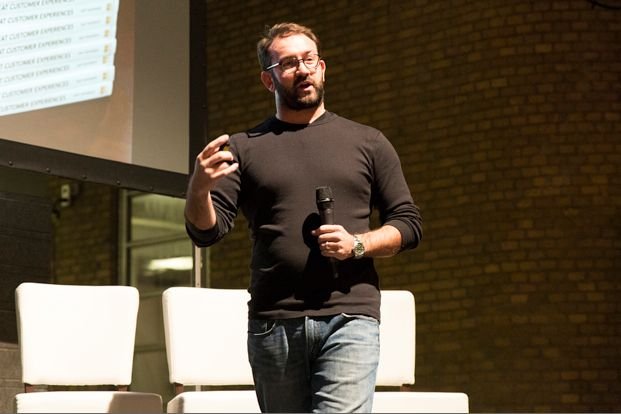
Same heretical opinions, now in slimline packaging.
With the launch of the new book around the corner — woohoo! — I had the customary set of headshots and press images done last week, having lost seventeen kilos / 37lbs (at my lightest) since the last time I found myself in a photography studio.
Losing the weight was really, really hard. It took a year and a half of dedicated effort and sacrifice to undo a decade or more of bad habits. So in case anyone here has the same goal, here’s a few things that worked for me.
Be held to account.
I had help from a nutritionist who I saw every few weeks. Knowing I had to check in with her held me to account and made it easier to resist temptation! You don’t need professional help to get the same results, you could find a friend with similar goals and support each other.
Write it down.
I learned fairly early that what you think you eat and the amount of exercise you think you get are not necessarily reflective of reality! Keeping a food an exercise diary or tracking them with an app reveals your actual behaviours and makes it easier to stay on track.
Find a form of exercise you enjoy.
If it feels like punishment you won’t stick with it. I like walking, running and surfing so I did those and always looked forward to getting some exercise.
Portion control is key.
Smaller plates, measuring portions with scales or measuring cups…it really helped me make sure I wasn’t over eating.
Don’t let occasional slips turn into abandonment.
You’re only human. Maybe it’s your birthday and you drink a bit too much. Maybe you’re at the movies and you eat a kilo of pick’n’mix. It doesn’t matter. What matters is that you don’t allow exceptions to become the rule or slips to cause you to give up. Go easy on yourself and celebrate your progress as you go!
If this is something you’re struggling with and need a sympathetic ear, drop me a message. I have no expertise whatsoever but I can offer encouragement! :)
Studio photo and new profile pic: Panos Damaskinidis
See this post on LinkedIn
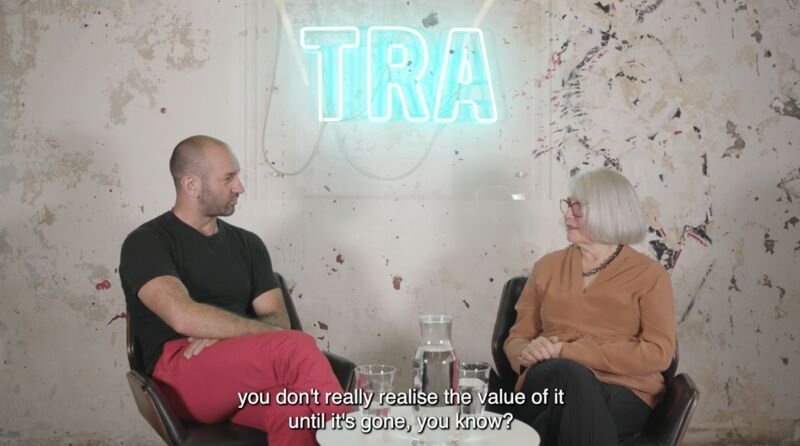
I had a great conversation about CX and trust with Colleen Ryan at TRA in Auckland earlier this year, and our dialogue also covered some of the biggest challenges the CX industry is facing.
I would quote bits of it to try and lure you in, but quoting yourself being quoted by someone else quoting you is just plain weird. Instead I cordially invite you to click this link:
https://lnkd.in/g-jKDuUT
Cheers!
See this post on LinkedIn

It’s been a couple of days since I shared a brief story about restoring my friend’s bike after his suicide in May.
Since then I’ve had calls or messages from people here — some of whom I've never met — sharing their own similar experiences, how they have navigated grief, offering support and encouragement, or just checking if I’m ok.
These responses have reminded me that for all their problems social networks can really bring people together, that most people are kind most of the time, and will often readily support or help others in need — even if they don’t know them. Most people are really quite wonderful actually.
It’s also good to be reminded that if you’re struggling with something, or have been through tough times and come out the other side it is good to talk and good to share. You’ll be surprised who comes out of the woodwork in dark times to steer you to the light, and by just how much love and positivity there is in the world for all of us.
Thank you so much.
Pic: Panos Damaskinidis
See this post on LinkedIn

It is with a heavy heart that I have finished my second motorcycle build.
The bike belonged to a close friend of mine, Scott. We rode together and would cross paths socially several times a week. At 71,000 miles the engine died and he didn’t have the means to replace or rebuild it so he abandoned the bike and financed a new Triumph instead with a small deposit.
A few months later he rode out on one of our favourite canyon roads, sat under a tree looking out across the beautiful Santa Monica mountains and took his own life. I had seen him the day before. His beer was still in my fridge. I, along with his two daughters, friends and family were devastated.
Since then I have poured my grief into rebuilding the abandoned Honda to as close to perfection as I can manage and finally finished it last week. It has a new engine, bodywork, and every conceivable upgrade.
More importantly it rides like a dream and is fast enough to penetrate the horizon. Exactly as Scott would have liked it.
Specs in the comments for any moto-nerds. Thanks to my dear friend Panos Damaskinidis for the photos.
See this post on LinkedIn
Once in a while somebody comes along and writes a definitive masterwork on a subject. There's little need to read much else on the topic because they've communicated the essential information with such command, concision — and above all pragmatism — that everything else feels second rate or even superfluous.
In my opinion James A. King's Accelerating Excellence is such a book. If you are interested in achieving your potential, if you aspire to excellence, or if you manage or lead teams where high performance matters, this is the book you need to read, and you can purge your shelves of all those pop psychology and self-help books that never got you anywhere in the first place.
Highly recommended.
See this post on LinkedIn
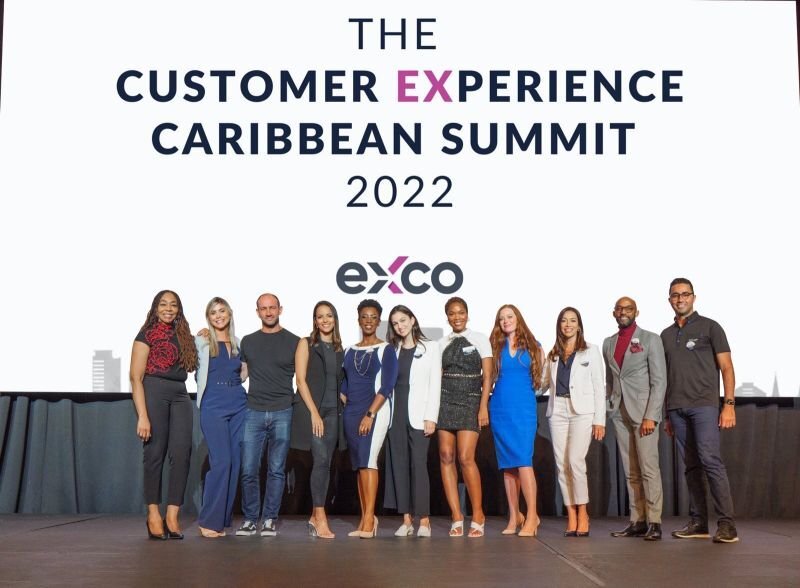
Being invited to speak at an event is an immense privilege: you're provided a platform to share your ideas and experience with a captive audience, you get to learn from others, and to build new relationships as well as deepening existing ones.
There is never a case where an event is lucky to have you. As a speaker you are always the lucky one — something I am particularly aware of having just got home from the Customer Experience Caribbean Summit in beautiful Trinidad.
I cannot recall a place where the people have made me feel so welcome. The organization was impeccable and it was a delight to share the stage with such a diverse group of experts. I am glad that my session was well received, and simply cannot thank Samantha Conyers, Chelsea de Souza Costelloe and Sacha Thompson enough for their incredible hospitality.
I’ll see you next year whether I’m invited to speak or not! :)
See this post on LinkedIn
I am making my way through Jack Springman's book, The Final Rant: Making Customer Experience a C-Suite Priority — The Opportunity, Challenge and Solution. Here’s what I have to say.
The title “The Final Rant” does not do this work justice. It is not a rant. It is a cogent, provocative and necessary critique of the field that demonstrates a deep and nuanced understanding, not just of the subject matter, but crucially its broader context.
It is a wonderfully clean and concise manuscript, is thoroughly referenced, and more importantly than either, of immense value to leaders, industry pundits and practitioners alike.
It would be a no brainer to buy it and read it at the customary $20 from Amazon, the fact that it is totally free of charge to download means getting a copy should be a reflex reaction that doesn’t require conscious cognition.
Well done Jack, it’s a stand out contribution to the field.
A link to download it is in the comments.
See this post on LinkedIn
Customer centricity is a rational-sounding idea that is almost impossible to achieve in practice.
There are many reasons for this, but perhaps the most obvious is the transfer of power it requires.
Making decisions based on customer research rather than our own opinions or ideas involves a shift of power from the executive to the customer. Instead of doing what we want, we are doing what they want. Instead of basing our decisions on what we think, we are basing them on what someone else thinks.
As logical as it may sound to be customer-centric, logic is no match for human nature, and most people do not cede power or control willingly. In fact they often fight tooth and nail to increase it. Think for a second about how much energy many people devote to enlarging their budgets (power), headcount (power), political influence (power), and salary and remuneration (power).
The idea that those who enjoy real decision-making power will immediately kowtow to data, primary research or customer feedback — especially if it clashes with their own beliefs — is a bit naive, as plenty of past projects have demonstrated.
By implication then, psychological safety, curiosity, intellectual humility, and objectivity are far more important organizational virtues to aspire to than customer-centricity. And the groundwork must be laid with the correct management span, structure and incentives.
Working on the above will get you somewhere. A vague aspiration to be customer-centric will almost certainly not.
See this post on LinkedIn

I have decamped to the Danish countryside to take landscape photos and consume baked goods for a week. Both are going pretty well so far.
This was last night's sunset — pastries not pictured.
Have a great week everyone. Normal sporadic service will be resumed eventually :)
See this post on LinkedIn
On reflection there is one immutable, ironclad law when it comes to customer experience:
Satisfaction always depends on expectations.
This is why two brands with completely different levels of service can both have satisfied customers. We expect different things from a low cost motel and a five star resort, for example.
With this in mind, the basis of every excellent customer experience is understanding, setting and meeting expectations, and every service failure, complaint or disappointment is in some way an expectation issue — facts that are systematically ignored by most businesses and even swathes of the CX profession itself.
No joke, I bought eight popular books on journey mapping recently and the word expectation didn’t even appear in the index of any one of them, let alone get comprehensive coverage. But if your journey map doesn’t explicitly capture the expectations customers have and expectations that must be set for each stage of the journey you are leaving the very thing you are seeking to improve to chance.
Simply put, if you do not know what your customers expect, do not set clear expectations and do not reset their expectations when something changes you cannot satisfy them. The good news is that most organizations are so bad at this stuff that getting it right is probably enough to stand head and shoulders above the competition.
See this post on LinkedIn
There are no ironclad laws when it comes to customer experience but this is pretty close:
The more sexy and exciting an opportunity sounds the less important it is.
Or perhaps worded differently, the more routine, obvious or boring the aspect of the experience is, the more value it has.
A simple example:
I spent the last week staying in a posh hotel in Auckland. There was a selection of craft whiskeys and chocolate in the room — no complaints there — but there was nowhere to store clothes except for one hanger, no way of knowing what any of the nine light switches would do, and a broken thermostat that made the room unpleasantly cold.
There’s nothing especially exciting about getting these basic things right — drawers or hangers, lights that work and the ability to change the room temperature — but they matter a lot more than the artisanal chocolate bars.
My advice: while everyone else is trying to be different, clever, trendy or bleeding edge, focus instead on getting better and better at the absolute basics and most obvious sources of value for the customer. Aim to elevate the mundane to an artform.
Brilliant basics appeal to the most buyers in the most buying situations. And if you want a successful business, attracting more people more of the time ain’t a bad starting point.
See this post on LinkedIn
Han van Meegren failed as an artist in his own right but was astonishingly successful as a forger, and churning out fake Vermeers was his specialty.
He fooled everyone with his perfect forgeries, which soon found their way into notable collections around the world. He even sold one to Hermann Göring, which landed him in hot water when the war was over. He was accused of collaborating with the Nazis and plundering Dutch cultural artifacts — crimes which carried the death penalty — so he had no choice but to come clean.
At first nobody would believe him, so to prove it he got drunk and high — his preferred working conditions — and painted one in the courtroom.
Overnight the Van Meegren / Vermeer paintings became worthless. They were removed from the walls of the finest galleries in the world and tossed in the trash, which brings me onto the point.
Value is not a property of a product, service, experience, or brand. It is nothing more than a belief that exists in the customer’s mind.
This is why stocks can go up and down. Why a vintage Ferrari can go from being junk to carrying a $15,000,000 price tag. And why ingenious adverts can transform pricing power and quality perceptions. Because value is just a belief, and beliefs can change.
With this in mind, while it's useful to ask questions like “What does the customer want and need?” or “What should our positioning be?” when we're trying to create more value, it can also be powerful to think in terms of beliefs:
What does the customer believe, about themselves, our category, our product, our rivals…?
What do we want them to believe?
And what tools do we have at our disposal to build those beliefs?
Perception is reality when it comes to value. Something worth thinking about.
See this post on LinkedIn
For those of you who think the key to market dominance is simply to have the best product...
I cordially invite you to create a presentation using Google Slides or Keynote then attempt the same task using the insufferable, steaming turdpile that is Microsoft PowerPoint.
One of those days... :)
See this post on LinkedIn
It’s easy to smile and nod when people say “We need to change the culture.” But the whole point of culture is that it resists change.
It brings cohesion to a social group by encouraging and reinforcing existing behaviours — “the way we do things around here”. Culture is a stabilizer. Ballast in the hull. Routines, rituals and mentalities can persist for thousands of years precisely because culture is a change-resistant phenomenon.
It is also emergent. The by-product of education, leadership, incentives, habits, history, people, place and time. Culture isn’t like a part on a machine. You can’t just swap it out for a new one.
So we can’t change the culture as people love to say. We can only change the things that might eventually change the culture — the incentives, training, leadership and management, people, processes, and the environment they work in — and hope that over time they have an alchemical impact on accepted norms.
See this post on LinkedIn
Two more great people to follow:
Jason Andrew — talks about accounting, finance and the numbers side of business in an interesting, accessible and engaging way. Everyone's dream accountant.
Giles Edwards — Hosts the brilliant Call to Action marketing podcast. Those who know me know I am borderline allergic to podcasts. This is one of the few exceptions that proves the rule.
Have a great weekend!
See this post on LinkedIn